What is the Nigerian prince scam?
The Nigerian prince scam is a type of advance-fee fraud in which a scammer promises you a large amount of money but first asks you to pay a smaller fee or provide personal or financial information.
In the classic version, someone claiming to be a Nigerian prince, government official, banker, or wealthy businessperson contacts you unexpectedly. They say they have millions of dollars that they can’t access or transfer without your help. In exchange for your assistance, they promise you a generous share.
But there’s always a catch. Before you can supposedly receive the money, you need to pay a processing fee, tax, legal expense, or transfer charge. If you pay, another problem — and another fee — may follow. The promised money never arrives.
Some Nigerian prince scammers also ask for bank account details, identification documents, credit card information, or login credentials. Sharing this information can put victims at risk of further financial fraud and identity theft.
The Nigerian prince storyline is only one version of a much broader category of online scams. In 2025, the FBI’s Internet Crime Complaint Center (IC3) received 7,762 complaints categorized as advance-fee fraud, with reported losses of around $155.9 million.¹ These figures cover advance-fee fraud as a whole, not Nigerian prince scams alone — but the losses are real.
How does the Nigerian prince scam work?
The details of a Nigerian prince scam can vary, but most versions follow the same basic structure:
- Initial contact. You receive an unexpected email, text, phone call, or message on social media or a messaging app. The sender may claim to be a prince, banker, lawyer, government official, wealthy widow, or another person with access to a large sum of money.
- Setting up the story. The scammer claims the money is tied up in an inheritance, bank account, business deal, or another situation that prevents them from accessing it directly.
- Request. The sender asks for your help transferring or accessing the funds and promises you a percentage of the money in exchange. Before the transfer can supposedly take place, the scammer asks you to cover a tax, legal fee, processing charge, or another expense. They may also request banking details or other sensitive information.
- Escalation. If you pay the first fee, the scammer may invent another problem that requires another payment. New taxes, administrative charges, and legal expenses can keep appearing as long as you keep paying.
- Disappearance. Once you refuse to send more money or recognize the scam, the fraudster usually cuts off contact. The promised funds never arrive.
What are the psychological tactics used in the Nigerian prince scam?
Nigerian prince scams rely on more than the promise of easy money. Scammers use social engineering tactics to make their stories more convincing, build trust, and discourage victims from stopping to check whether the claims add up.
Common psychological tactics include:
- Temptation. Scammers promise a substantial amount of money to make the requested fee look small by comparison. A $500 payment may feel easier to justify when the supposed reward is worth millions.
- Urgency. The scammer may claim that the transaction has a strict deadline or that authorities could seize the funds. The pressure encourages victims to act first and ask questions later.
- Secrecy. Scammers often describe the transaction as confidential and tell victims not to discuss it with anyone. That can prevent a friend, family member, or bank employee from spotting the warning signs.
- Authority. A scammer may pretend to be a prince, lawyer, banker, government official, or business executive. Titles and professional language can make an otherwise unusual request appear more credible.
- Trust-building. Some scammers exchange messages with victims for days or weeks before asking for money. Regular communication can make the sender feel less like a stranger by the time the first payment request arrives.
- Emotional manipulation. Some versions focus on sympathy rather than financial gain. A scammer might claim to have lost a spouse, face political persecution, or need help protecting a family inheritance.
- Sunk-cost effect. Once a victim has already sent money, walking away means accepting the loss. The scammer may insist that just one more fee stands between the victim and the promised funds.
These tactics aren’t unique to the Nigerian prince scheme. Fraudsters use similar methods across many types of online fraud because emotions such as excitement, sympathy, fear, and urgency can make it harder to judge a situation objectively.
The history of the Nigerian prince scam
The Nigerian prince scam became closely associated with email, but its roots go back much further than the internet.
The scam is commonly traced back to the Spanish Prisoner scam, a confidence scheme documented in the 19th century.² In one version of the scheme, someone contacted the victim about a wealthy or important person supposedly imprisoned in Spain. The victim could help pay for the prisoner’s release and would receive a generous financial reward in return.
The prisoner didn’t exist, and neither did the reward. The scheme set the formula still in use today: a stranger, a large fortune, an obstacle, an upfront payment, and the promise of much more money later.
The version associated with Nigeria became prominent in the 1980s.² Scammers sent letters involving business deals, government contracts, oil money, inheritances, and other large sums that supposedly needed to be transferred out of the country. As communication technology changed, fraudsters moved from postal letters to faxes and eventually email.³
By the 1990s, email made it much easier to run the scheme at scale. Scammers could contact large numbers of people quickly and at little cost instead of mailing individual letters. Even a response rate below 1% gave fraudsters enough victims to make the scheme profitable.
Over time, the supposed Nigerian prince became the most recognizable character in the scheme. Memes and jokes about the scam became part of early internet culture, and a mysterious prince offering millions turned into shorthand for an obviously suspicious online offer.
Why is the Nigerian prince scam also called the “419 scam”?
The term “419 scam” comes from Section 419 of Nigeria’s Criminal Code, which covers obtaining property through false pretenses with intent to defraud.⁴ As Nigerian advance-fee fraud gained international attention, “419” became a common name for this type of fraud.
However, the name can create a geographic misconception. A Nigerian prince scammer doesn’t necessarily operate from Nigeria, and scammers can run advance-fee fraud from anywhere in the world.
The terms “Nigerian prince scam” and “419 scam” therefore describe a familiar type of fraud, not the scammer’s actual location.
The evolution of the Nigerian prince scam
Today’s Nigerian prince scams look very different from the letters and emails that made the scheme famous. Scammers have adapted the same advance-fee model to new technologies, communication channels, and scenarios. Advance-fee scams now often start through SMS, social media, dating sites, messaging apps, or phone calls.
The same advance-fee logic now appears in many different scams:
- Inheritance and lottery scams. A scammer tells you that you inherited money or won a prize but need to pay taxes, processing costs, or another fee before receiving it. Learn more about how lottery scams work and the warning signs to look out for.
- Romance scams. Some romance scams opens in a new tab use a similar approach but build an emotional connection first. The scammer eventually introduces an emergency, travel problem, medical expense, or another reason they need money.
- Investment scams. In some investment scams opens in a new tab, fake investments appear to generate profits until you try to withdraw them. The scammer then demands another deposit, tax, or fee before supposedly releasing the money.
- Job scams. Scammers behind fake job offers may ask applicants to pay for equipment, training, visas, background checks, or other supposed requirements. Requests to pay up front are a common warning sign of job scams opens in a new tab.
- Visa and immigration scams. Scammers promise visas, permits, or help with immigration procedures in exchange for bogus processing or administrative fees.
Warning signs in Nigerian prince scam emails and messages
The classic Nigerian prince scam email may be easy to spot, but modern versions can be far more convincing, especially with the help of AI. Fraudsters can use generative AI to create polished messages, translate them into different languages, and produce large numbers of variations quickly. Spelling errors and awkward grammar were once common signs of a scam email. With AI scams opens in a new tab, they aren’t reliable indicators on their own.
Rather than relying on one clue, look at the overall story and what the sender wants you to do. Common red flags include:
- Unexpected contact. A stranger approaches you with an inheritance, prize, financial opportunity, business proposal, or unusual request for help.
- A large reward for little effort. Someone promises you a large sum simply for receiving a transfer, providing information, or helping with paperwork.
- Requests for upfront fees. The sender asks you to pay taxes, legal costs, processing charges, or transfer fees before you can receive the promised money.
- Urgency. You need to act immediately, respond within a short deadline, or make a payment before you have time to verify the story.
- Secrecy. The scammer tells you not to discuss the transaction with family members, your bank, a lawyer, or anyone else.
- Requests for sensitive information. The sender asks for bank details, passwords, identity documents, credit card information, or other personally identifiable information (PII).
- Unusual payment methods. The scammer asks for wire transfers, cryptocurrency, gift cards, or another payment method that can be difficult to reverse.
- Suspicious sender details or links. The email address doesn’t match the organization the sender claims to represent, or the message directs you to an unfamiliar website.
- Impersonal greeting. Like many scam emails, these messages may open with “Friend” or “Sir” instead of your name.
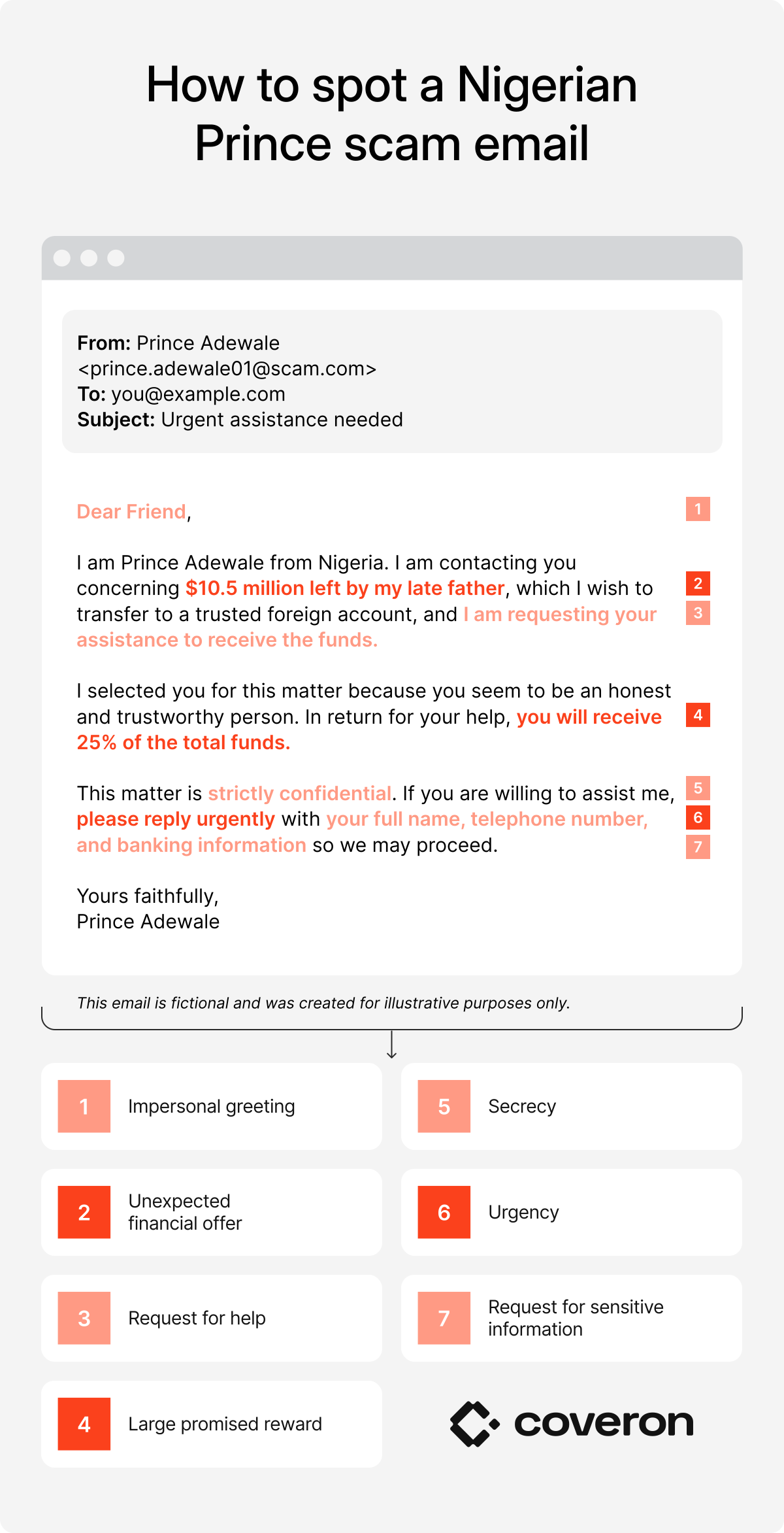
An example of a classic Nigerian prince scam email
Email is the classic format associated with the Nigerian prince scam, but similar messages can also arrive by text, social media, or messaging apps.
Classic examples often follow a recognizable pattern: an unexpected financial offer, a request for help, and the promise of a large reward. They may also pressure you to act quickly, keep the arrangement secret, or provide personal or financial information.
The example below shows some of the common warning signs to look out for.
How to protect yourself from the Nigerian prince scam
You don’t need to work out who is really behind a suspicious message before deciding not to engage. If a stranger promises you a large financial reward but wants money or sensitive information first, err on the side of caution.
To protect yourself from Nigerian prince scams:
- Ignore unsolicited financial offers. Don’t respond to unexpected messages promising inheritances, prizes, investments, or shares of large fortunes.
- Never send money to release promised funds. Don’t pay supposed taxes, processing charges, legal expenses, or transfer fees to collect money from a stranger.
- Verify the sender independently. If someone claims to represent a bank, government agency, company, or other organization, find its official contact information yourself. Don’t rely on the email address, phone number, or link in the suspicious message.
- Don’t click unexpected links or attachments. Nigerian prince phishing messages may also lead to fake login pages or malicious downloads. Open the organization’s official website yourself instead.
- Protect your personal information. Don’t give strangers your passwords, banking details, identity documents, or credit card information. Check out our article on how to protect your personal information opens in a new tab for more ways to reduce your exposure.
- Use spam filters and scam protection tools. Spam filters can catch many scam emails before they reach your main inbox. Coveron also offers scam protection with phishing and malware alerts, as well as cyber protection benefits that may reimburse eligible scam losses.
- Report suspicious messages. Mark scam emails as spam or phishing and report fraud to the appropriate platform, consumer protection agency, or law enforcement authority.
What to do if you’ve fallen for a Nigerian prince scam
If you’ve already sent money or shared sensitive information, act as soon as possible. You may not always be able to recover lost funds, but quick action can help prevent further losses or account misuse:
- Stop communicating with the scammer. Don’t send another payment, even if they claim that one final fee will release the money. Cut off contact and block the sender where possible.
- Contact your bank or payment provider. Explain that you sent money as part of a scam and ask whether they can stop or reverse the transaction. If you used a wire transfer service such as Western Union, contact the provider immediately as well.
- Secure your accounts. Change passwords for any accounts that may be at risk and enable two-factor authentication. If you shared credit card information, contact your card issuer and follow its fraud procedures.
- Report the scam. Report the account or message to the platform where you encountered it and contact the appropriate fraud-reporting or law enforcement authority. In the US, you can report internet fraud to the FBI’s IC3 at ic3.gov or scams to the Federal Trade Commission (FTC) at reportfraud.ftc.gov
- Monitor for further suspicious activity. Check your bank and credit card accounts for transactions you don’t recognize. If you shared enough personal information to put you at risk of identity theft, consider a fraud alert, credit freeze, or similar protections.
- Document every interaction. Keep copies of emails, messages, payment confirmations, usernames, phone numbers, and other evidence. Your bank, payment provider, platform, or authorities may need them.
Get dark web alerts plus up to $100K in eligible online-fraud coverage.
30-day money-back guarantee
FAQ
References
- Federal Bureau of Investigation. (2026). 2025 IC3 Annual Report. Internet Crime Complaint Center. https://www.ic3.gov/AnnualReport/Reports/2025_IC3Report.pdf opens in a new tab
- AARP. (n.d.). What you should know about Nigerian prince scams. AARP. https://www.aarp.org/money/scams-fraud/nigerian/ opens in a new tab
- Brunton, F. (2013). A brief history of the internet’s favorite scam. MIT Press Reader. https://thereader.mitpress.mit.edu/a-brief-history-of-the-internets-favorite-scam/ opens in a new tab
- Federal Republic of Nigeria. (1990). Criminal Code Act (Chapter 77). WIPO Lex. https://www.wipo.int/wipolex/en/legislation/details/5591 opens in a new tab
- The State House. (n.d.). The State House, Abuja. Federal Republic of Nigeria. https://statehouse.gov.ng/people/ opens in a new tab