What is a grandparent scam?
A grandparent scam is an impersonation scam in which a criminal pretends to be a grandchild, another relative, or an emergency responder. They claim money is urgently needed for bail, medical care, travel, or legal fees. This type of scam may also be called a grandparent emergency scam or grandma scam.
How does the grandparent scam work?
Grandparent scams mainly target adults aged 60 and over, especially those in their 70s and 80s. Criminals may call at random or use social media, public records, breached accounts, and obituaries to personalize the story. Most grandparent scams follow the same pattern:
- The scammer makes contact. The victim receives a call, text, email, or social media message. Many cases start as phone scams.
- A crisis is invented. The supposed grandchild has been arrested, injured, hospitalized, or stranded and needs help immediately.
- An “official” joins in. The scammer may hand the phone over to someone posing as a lawyer, police officer, doctor, or court official to support the story and demand payment.
- The scammer demands secrecy. They warn the victim not to tell parents, relatives, the bank, or the police.
- Payment is requested. The scammers demand a wire transfer, payment app transfer, cryptocurrency, gift cards, mailed cash, or money collected by a courier.
- More fees appear. After the first payment, the criminals may invent further medical, bail, or legal costs.
Common tactics used in grandparent scams
Scammers use emotional pressure and increasingly advanced technology to prevent victims from pausing and checking their story. These are the most common tactics used:
- A panicked or injured voice. The caller cries, whispers, or claims that an injury or poor connection has changed how they sound.
- AI voice cloning. Audio from a video, voicemail, podcast, or social media post may be used to imitate a relative. A familiar voice is no longer reliable proof of identity.
- Personal information. Names, schools, travel plans, and family relationships may come from social media, hacked accounts, public records, or data breaches. This personally identifiable information (PII) makes the story more credible.
- Caller ID spoofing. The number may appear to belong to a relative, hospital, court, or police department. Checking scam numbers can help, but caller ID can be falsified.
- Multiple participants. One person plays the relative, while another plays a lawyer or official, giving the scam a false sense of legitimacy.
- Secrecy and isolation. The victim is told that speaking to anyone else will embarrass the grandchild or make the situation worse.
- Hard-to-reverse payments. Gift cards, cryptocurrency, wire transfers, cash, and couriers are preferred because recovery of the spent funds is difficult.
How to spot grandparent scams: Red flags to watch out for
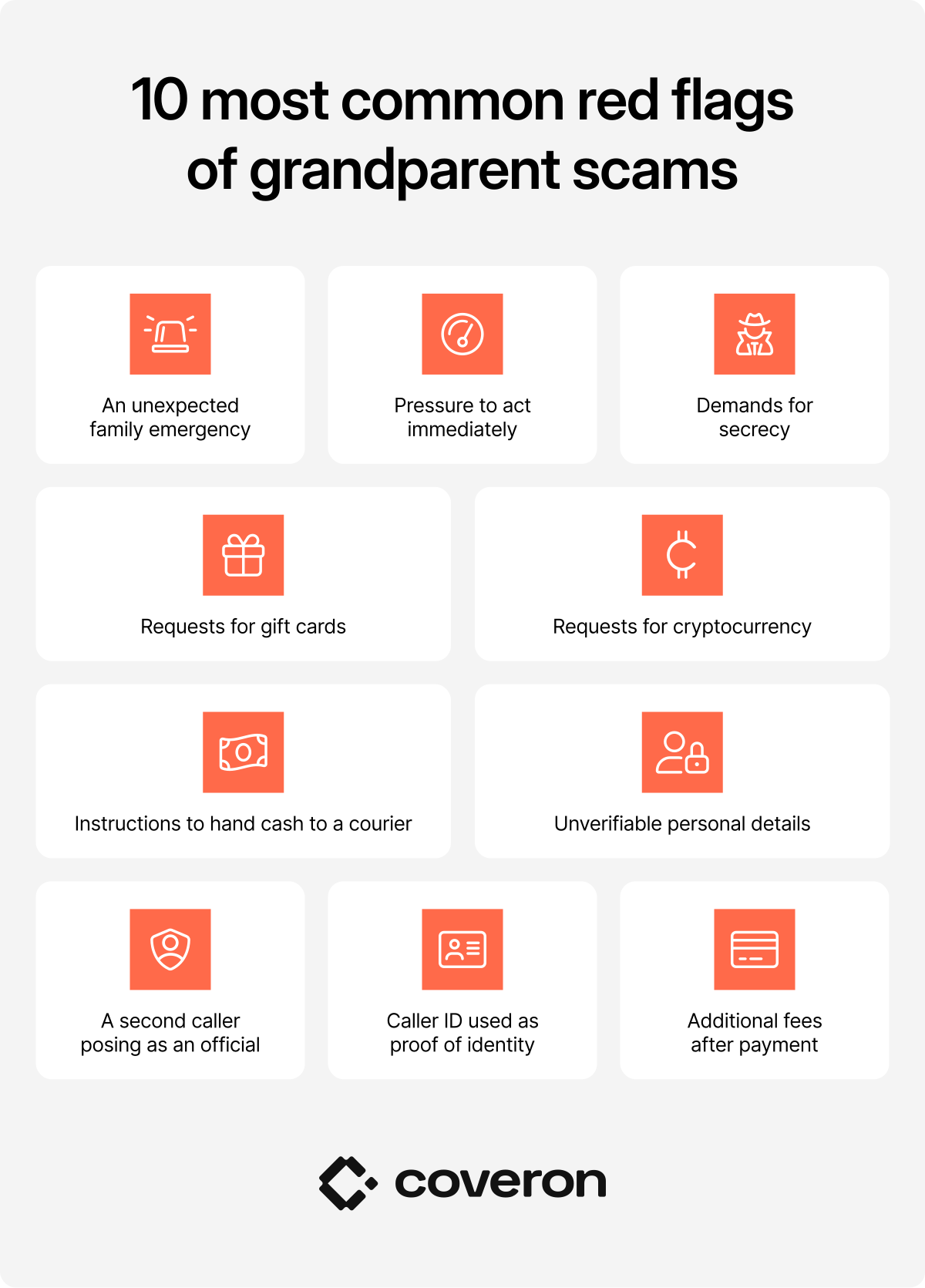
A real emergency can be confusing, so one unusual detail may not prove fraud. However, grandparent scams tend to follow a recognizable pattern. Pause and verify the situation independently if you notice any of the following warning signs:
- An unexpected crisis. The first contact immediately involves an arrest, accident, injury, or travel emergency.
- Extreme urgency. You are told there’s no time to check the facts.
- A demand for secrecy. The caller says not to contact parents, relatives, banks, or police.
- Unusual payment methods. They request gift cards, cryptocurrency, wired money, mailed cash, or a courier.
- Payment to an individual. Supposed bail or hospital fees must go to a personal account or “lawyer.”
- Unusual behavior from a familiar voice. The caller avoids normal conversation, gives vague answers, or can’t answer personal questions.
- A second caller supports the story. Someone posing as a lawyer, police officer, doctor, or court official contacts you before you can verify the claim.
- Instructions to stay on the line. The scammer tries to prevent outside calls.
- Caller ID presented as proof. The displayed number is treated as confirmation of identity.
- Repeated fees. New costs appear after the first payment.
How to prevent grandparent scams
Grandparent scams are most effective when fear takes over and victims don’t question the caller. A few safeguards can help you pause, verify the claim, and avoid sending money to a scam artist:
- Create a family safe word. Choose a word or phrase in advance that only you and close family members know. If the caller can’t provide it, treat the request as suspicious.
- Call relatives directly. Use a saved number rather than the contact details supplied by the caller.
- Ask questions that aren’t easy to research. Avoid details visible online, such as birthdays, schools, or pet names.
- Limit personal information online. Be cautious when posting about family relationships, travel plans, and daily routines, and regularly review your social media privacy settings.
- Confirm the emergency before making any payment. Never send money until another trusted person has confirmed the emergency.
- Use scam protection tools as an added layer of defence. A scam protection service may flag suspicious contacts or exposed information, although it can’t replace direct verification.
- Report suspicious calls. Even if no money was lost, reporting the attempt may help authorities connect related cases and warn other families.
Grandparent scam trends and statistics in the US
Grandparent scams remain a serious problem across the US, and the methods used are becoming harder to recognize. The Federal Bureau of Investigation (FBI) reported more than $5 million in losses from “distress scams” in 2025.1 These schemes involve criminals impersonating relatives or friends who supposedly need urgent financial help. The National Council on Aging also lists grandparent scams among the leading financial scams targeting older adults.2
Recent arrests show that organized networks often run these scams. In 2024, the Department of Justice charged 16 people over an alleged scheme that targeted hundreds of older Americans and caused millions of dollars in losses.3 Identified victims lived in New Jersey, New York, Pennsylvania, and Massachusetts. Couriers collected cash directly from their homes. In May 2026, seven Canadians were charged for a grandparent scam in Montreal that defrauded elderly U.S. victims.4
Grandparent scam news items like these are common, and developing technology is adding another layer of risk. The Federal Trade Commission (FTC) warns that scammers can clone a relative’s voice using a short audio clip from online content. So while a familiar voice may sound convincing, it shouldn’t be treated as proof of identity.
What to do if you receive a grandparent emergency scam call
First, don’t feel pressured to rush. End the call and verify the story you’ve received from the caller using contact details you trust.
Immediate actions
- Hang up and call the relative using a saved number rather than calling back the number that contacted you.
- If you can’t reach them, contact another close family member.
- Ask specific questions and verify the answers separately.
- Don’t send money or share sensitive information.
- Save voicemails, texts, numbers, names, and payment instructions to report the fraud.
Actions after the call
- Report the attempt to your financial institution, the FTC5, and the FBI’s Internet Crime Complaint Center.6 Contact local police if you lost money or a courier has visited your home.
- Warn other family members and friends.
- If you sent money, contact the payment provider immediately. Ask whether the transaction can be frozen or recalled.
- If you disclosed personal or financial information, change affected passwords, review recent account activity, and consider a fraud alert or credit freeze.
Get notified and act immediately.
30-day money-back guarantee
FAQ
References
- FBI: Internet Crime Report 2025. https://www.fbi.gov/file-repository/2025_ic3report.pdf/view opens in a new tab
- The Top 5 Financial Scams Targeting Older Adults (July 2026). https://www.ncoa.org/article/top-5-financial-scams-targeting-older-adults/ opens in a new tab
- United States Attorney’s Office: Sixteen People Charged with Conspiracy to Defraud Hundreds of Elderly Americans of Millions of Dollars (April 2024). https://www.justice.gov/usao-nj/pr/sixteen-people-charged-conspiracy-defraud-hundreds-elderly-americans-millions-dollars opens in a new tab
- United States Attorney’s Office: Seven Additional Canadian Nationals Charged in Connection with Nationwide Multimillion-Dollar “Grandparent Scam” Following Homeland Security Task Force Investigation (May 2026). https://www.justice.gov/usao-vt/pr/seven-additional-canadian-nationals-charged-connection-nationwide-multimillion-dollar opens in a new tab
- Federal Trade Commission: Report fraud. https://reportfraud.ftc.gov/ opens in a new tab
- Internet Crime Complaint Center. https://www.ic3.gov/ opens in a new tab