Do people see digital identity theft as equally serious as physical theft?
Yes, according to most people surveyed. The survey covered eight countries — Australia, Canada, France, Germany, Italy, Spain, the United Kingdom, and the United States — and across all of them, the vast majority of respondents agreed that having your digital identity stolen is just as serious as losing important physical items like your wallet or keys.
In Spain, 92% of people agreed that identity theft is as serious as losing physical items, which is the highest rate among all countries surveyed. Italy came in second at 91%, followed by the United Kingdom at 88%. In the United States, 85% of respondents agreed, while Germany remains the least certain market, with 80% viewing digital identity theft as serious as physical theft of valuable items.
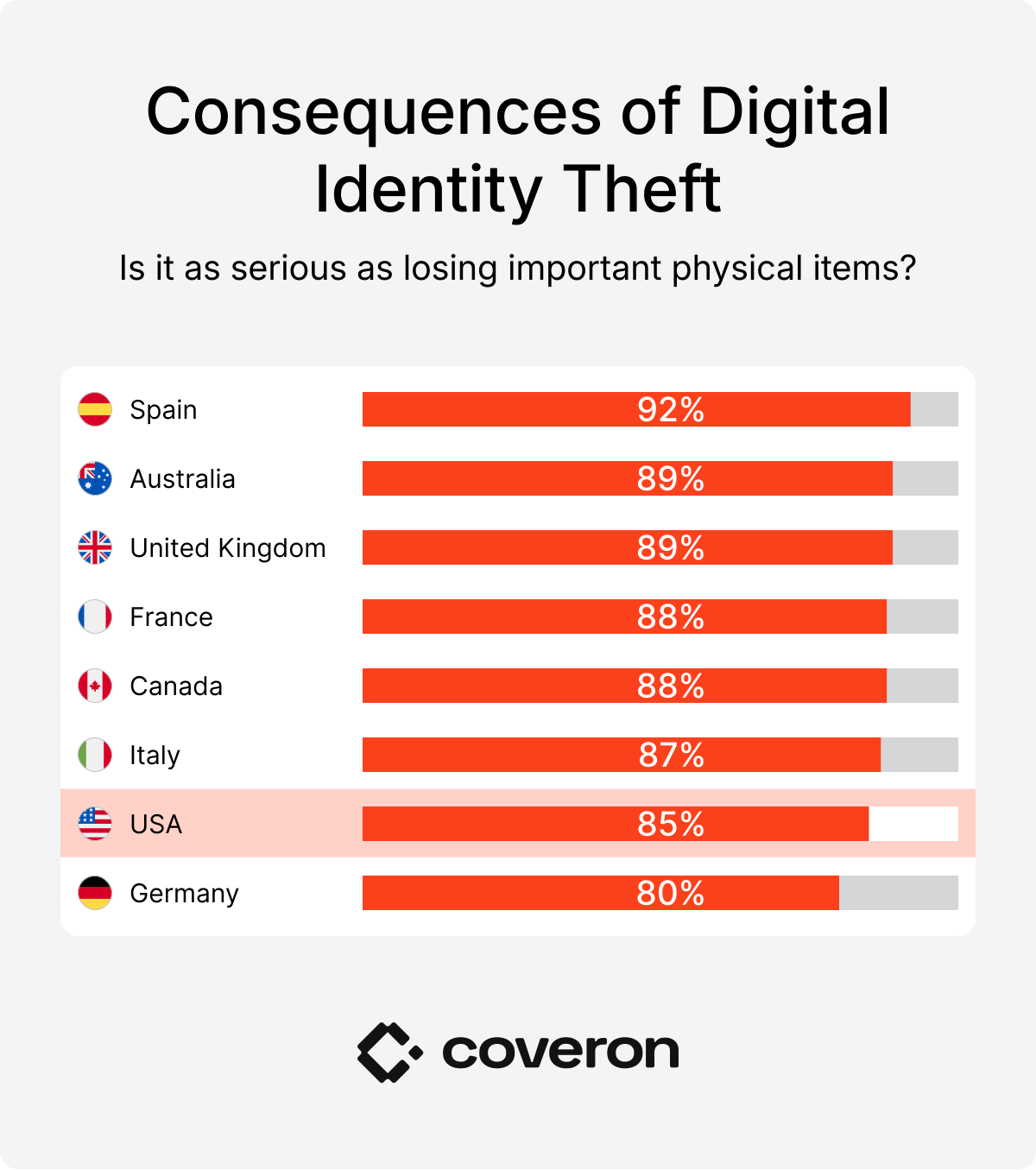
Only 1-4% of people across all countries disagreed with the idea that a stolen digital identity is just as serious as physical theft. Digital identity threats are a real problem, and people understand that stolen credentials can disrupt their life and their finances just as much as a stolen wallet. The intangible has become just as valuable as the tangible.
Which type of data exposure worries people the most?
The survey asked people which types of personal information they’d be most worried about seeing exposed online. Bank account information topped the list everywhere, but what comes second reveals each country’s unique vulnerabilities.
- United States. As many as 30% of Americans are most worried about national identification numbers being exposed, a significantly higher rate than any other country. This reflects how central Social Security numbers (SSNs) are to American identity systems and the decades of SSN-based identity theft that have shaped public awareness.
- Italy and Spain. Italy is the only country where PIN codes (40%) beat out bank account information (29%) as the top worry. Spain shows a similar pattern with PIN anxiety at 36%, suggesting these countries are particularly focused on transaction-level security.
- France and Germany. Both countries put passwords to personal accounts in their top three concerns — Germany at 31% and France at 27%. Digital access credentials matter more here than elsewhere.
- United Kingdom. The British worry about both passwords (32%) and passports (26%), making the UK the only country where digital credentials and physical identity documents both rank among top concerns.
- Australia. Australians show heightened anxiety around passports at 24% as well as birth certificate details at 13%, pointing to particular vulnerability around government-issued documents.
- Canada. Canadians show equal concern for passwords to personal accounts and PIN codes (both 29%), alongside national identification numbers (25%). This balanced emphasis reflects worries about both digital access and government-issued identifiers.
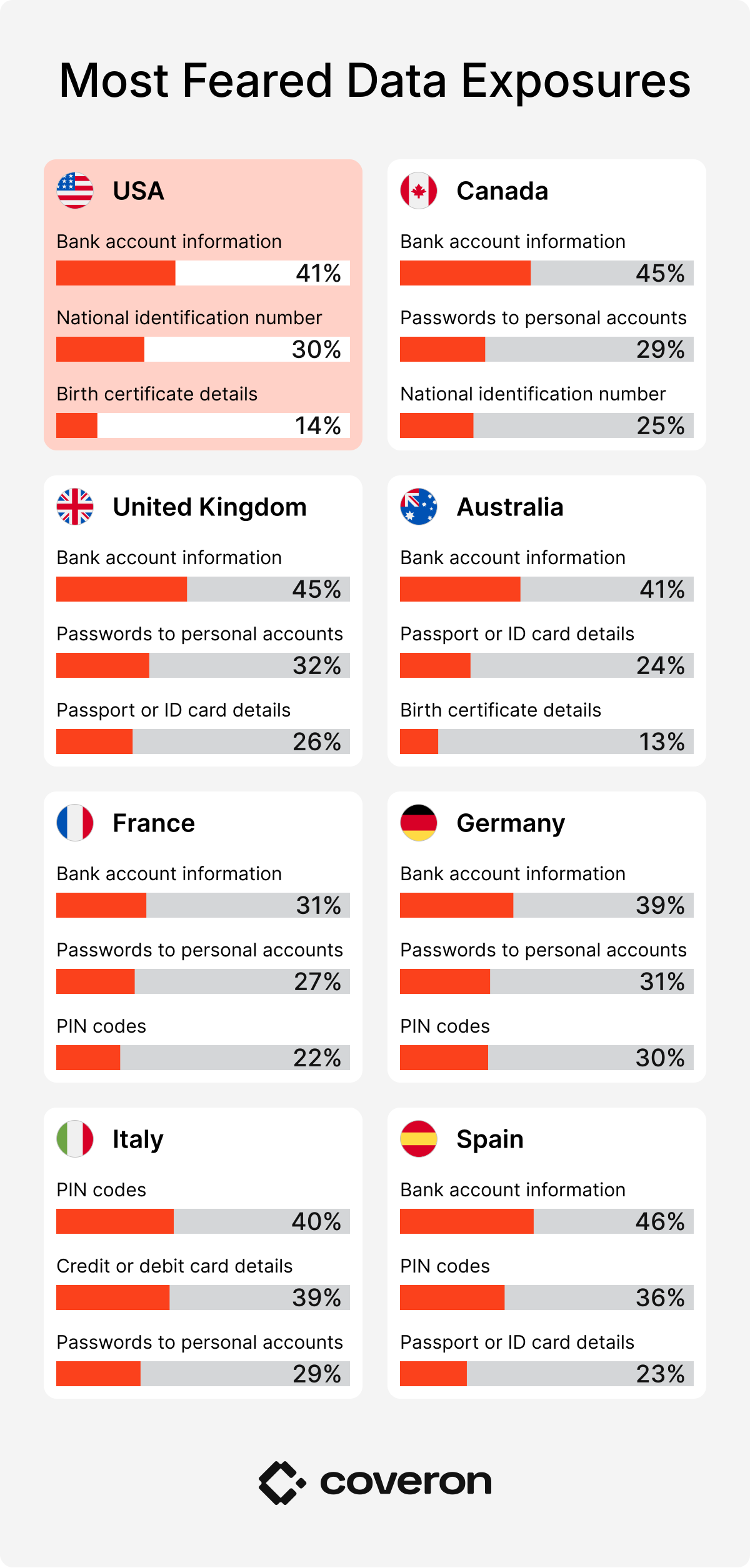
People worry most about the credentials that control their finances and prove their identity — the exact information thieves need to get in order to steal their money or impersonate them.
How to protect yourself from digital identity theft
The first step is to know what data identity thieves are after. Once you do, you can start taking specific actions to protect your personal information both online and offline:
- Use strong, unique passwords. Don’t reuse passwords across different accounts. If thieves breach one account, they won’t be able to access other accounts because those have different passwords. Consider using a password manager to keep track of them all.
- Protect your SSN and national ID. Only provide your SSN or national identification number when absolutely necessary. Ask why it’s needed and how it will be used. Remember, legitimate organizations won’t ask for this information over email or during unsolicited calls.
- Secure your bank account information. Never share account numbers, routing numbers, or online banking credentials through email or text. Check your bank statements regularly for unauthorized transactions and set up account alerts to catch suspicious activity early.
- Keep your PIN codes private. Memorize your PINs instead of writing them down. Cover the keypad when entering your PIN at ATMs or payment terminals and never share PIN codes with anyone, even if they claim to be from your bank.
- Safeguard physical identity documents. Store passports and birth certificates in a secure location at home. Only carry them when necessary. If you need to share copies for verification, use secure encrypted methods and mark them as copies.
- Monitor your accounts and credit. Regularly check your financial accounts and credit reports for unusual activity. The sooner you catch identity theft, the easier it’ll be to limit the damage.
- Consider using identity theft protection. Services like Coveron can monitor your personal information, send you alerts when something looks suspicious, and provide expert support if your identity is compromised.
Identity thieves look for easy targets. These practices make it significantly more difficult for identity thieves to take advantage of your information.
Methodology
This Coveron survey included 7,862 people aged 18 to 74 across eight countries: Australia, Canada, France, Germany, Italy, Spain, the United Kingdom, and the United States. Data collection took place between March 26 and April 6, 2026. To ensure the results accurately reflected each country’s internet-using population, the sample was structured with quotas based on age, gender, and geographic location. The fieldwork was conducted by Cint, a global technology company specializing in digital market research.
Get notified and act immediately.
30-day money-back guarantee