What is a data breach?
A data breach is a security incident that happens when unauthorized individuals gain access to sensitive or confidential information, usually through fraudulent means. It's also referred to as an information breach. Data theft can happen physically or digitally. It can be intentional, such as phishing attacks or malware campaigns, or accidental, like employee errors and misconfigured systems.
A data breach vs. data leak vs. cyberattack: What is the difference?
A common misconception is that cyberattacks, data breaches, and data leaks are the same. While they all involve attempts to get valuable data — usually targeting institutions like banks, government agencies, or health and human services — they have key differences.
- Data breach: When sensitive information is illegally accessed or stolen by unauthorized parties. It often involves personal data (like passwords or credit card info) and can have serious privacy and financial implications.
- Data leak: Unintentional exposure of sensitive data, often due to mistakes or inadequate security measures, like accidentally leaving a database unprotected online. It’s not always caused by malicious intent, but it still exposes sensitive information.
- Cyberattack: A deliberate and often aggressive attempt by malicious entities to gain unauthorized access to systems, disrupt services, or steal information.
All three can put personal data at risk, especially when attackers exploit vulnerabilities like weak passwords, unsecured access management, social engineering tactics, or software vulnerabilities.
What are the common types of data breaches?
Data breaches commonly fall under the following types:
External data breaches
External data breaches occur when an attacker from outside your network gains access to your valuable data.
Some examples include:
- Hacker cyberattack: Unauthorized access to systems by hackers, often exploiting vulnerabilities or weak security controls to steal data.
- Phishing: Fraudulent attempts to acquire sensitive information by pretending to be a trustworthy entity, often through fake emails or websites.
- Ransomware: Malicious software that locks or encrypts data and demands a ransom for its release.
- Malware: Malicious software installed on systems to steal, corrupt, or disrupt data.
- DDoS attacks: Attempts to overwhelm systems with traffic to disrupt services or create openings for further intrusion.
- Physical theft of laptops/devices: Stealing physical devices like laptops or phones containing sensitive information.
- SQL injection: A method where attackers use malicious SQL code to manipulate databases, often to extract sensitive data.
- Credential stuffing: Attackers use stolen login credentials (often from past breaches) to gain unauthorized access to other accounts, assuming users reuse passwords across platforms.
- Zero-day exploits: Attacks that take advantage of a previously unknown vulnerability in software or hardware, before the vendor has patched it.
Internal data breaches
A breach of information that occurs within a secured environment or is done by an insider is referred to as an internal data breach. These incidents can be especially damaging because trusted access often makes it easier to reach high-value data without triggering immediate security alerts.
Some examples include:
- Accidental exposure (human error): Negligence or mistakes, such as emailing confidential files to the wrong person, misconfiguring cloud storage (leaving a database exposed), or losing company devices.
- Malicious insider threats: Employees or contractors deliberately abusing their authorized access to steal company data, IP, or customer records for financial gain, revenge, or sabotage.
- Negligent insider threats: Employees who bypass security policies for convenience, such as using unapproved personal devices (BYOD), unauthorized cloud services (Shadow IT), or weak, shared passwords.
- Social engineering/phishing: Although often initiated externally, it becomes an internal breach when an employee falls for a phishing email or phone call, giving attackers internal access to systems.
- Privilege abuse: Authorized users accessing sensitive information that's not required for their job role, often due to improper access control management.
What type of information is targeted in a data breach?
Data breaches target sensitive data that carries financial, personal, or business value. In most cases, attackers go after personally identifiable information (PII). While data sets like customer data and corporate data are some of the most likely targets, attackers also go after:
- Social Security numbers: These can be used to commit identity theft, open fraudulent accounts, apply for loans, or bypass identity verification checks.
- Bank account details: Attackers may use this information to initiate unauthorized transactions, steal funds, or sell the data to other criminals.
- Credit card numbers: Stolen card details can be used for fraudulent purchases, account takeovers, or card-not-present scams.
- Healthcare records: Medical records often contain personal, financial, and insurance information, making them highly valuable for identity theft and insurance fraud.
- Home addresses: Address information can be used in phishing scams, identity fraud schemes, or to build detailed profiles of potential victims.
- Login credentials: Usernames and passwords allow attackers to access accounts directly, steal additional data, or launch further attacks using compromised accounts.
- Intellectual property materials: Proprietary designs, research, software code, and product plans can provide competitors or cybercriminals with significant financial advantages.
- Financial statements: These documents can reveal sensitive business information, financial weaknesses, or opportunities for fraud and extortion.
- Legal documentation: Contracts, agreements, and other legal records may contain confidential information that can be exploited for financial gain or leverage.
- Trade secrets or proprietary information: Businesses rely on confidential processes, formulas, and strategies to remain competitive, making this information a valuable target for cyber espionage and theft.
What are the causes of data breaches?
Data breaches are mainly caused by targeted and deliberate cyberattacks, security system vulnerabilities, and human error. Out of all of these factors, human error has repeatedly been one of the leading causes of data breaches. In most security environments, people are often the weakest link since even strong technical defenses can be bypassed by a mistake like falling for a phishing attempt.
Security tools, solutions, and software handle most of the technical protection, but they still rely on people to operate them correctly. Since human operators often control key access controls or permissions, attackers typically focus on targeting people instead of breaking directly into systems.
How do data breaches happen?
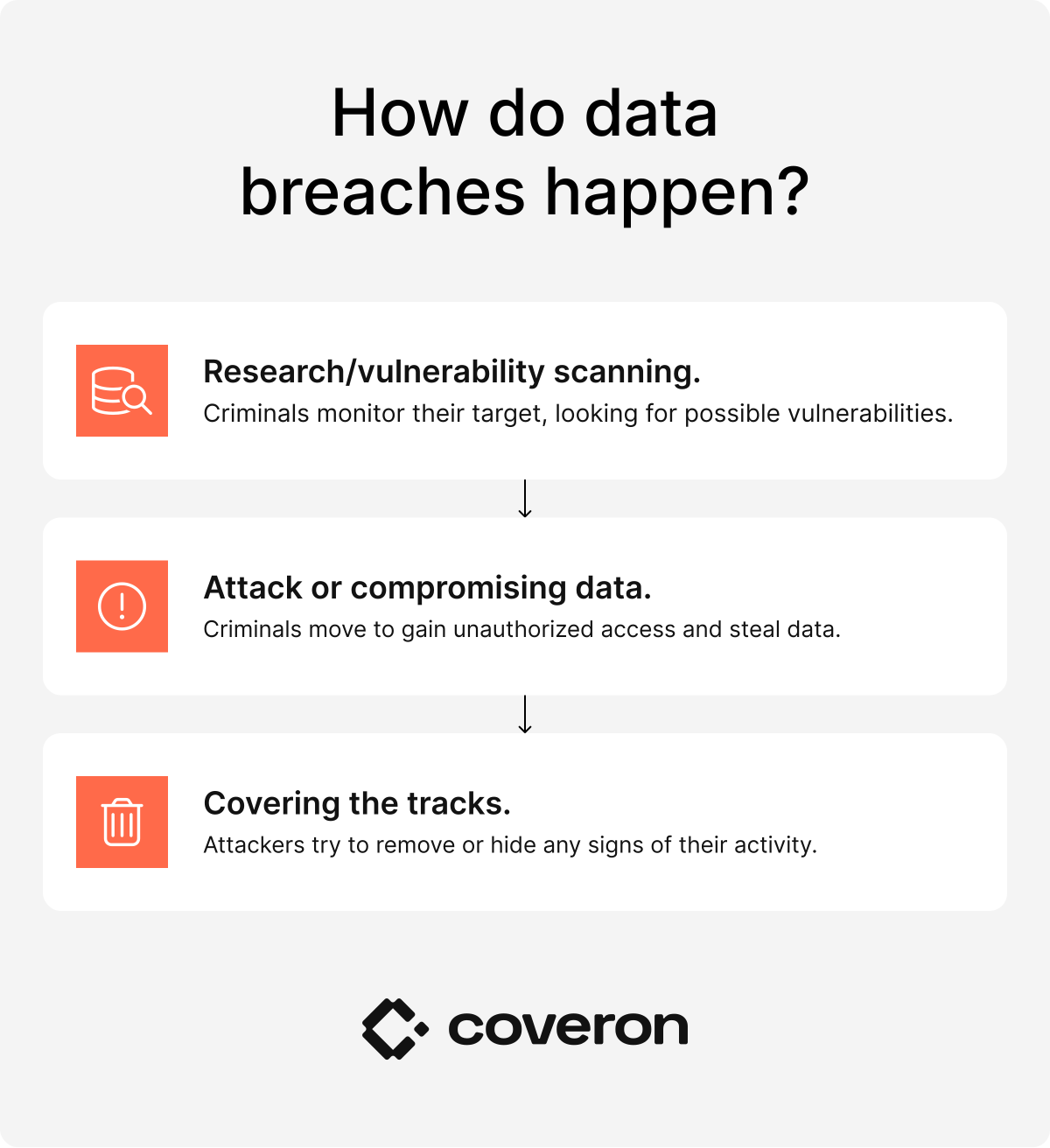
Data breaches rarely happen by chance. In most cases, cybercriminals follow a deliberate process to identify weaknesses, gain unauthorized access to sensitive information, and avoid detection for as long as possible. While the exact methods vary, most data breaches occur in three key stages:
Research/vulnerability scanning
Criminals will monitor their target, looking for possible vulnerabilities to exploit and ways to gain access to restricted data. This stage can last weeks or even months, depending on the goal of the attacker and the strength of the target's data security defenses.
Attack or compromising data
Criminals then move to gain unauthorized access and compromise or steal data. Because this stage is time-sensitive and carries a higher risk of detection, it's usually carried out rapidly once a viable entry point is found.
Covering the tracks
After obtaining the data they're after, attackers typically try to remove or hide any signs of their activity. They do so to stay unnoticed for as long as possible, so they can continue exploiting the stolen data or maintain access for future attacks.
What happens to your data after a breach?
After a data breach, your information is usually sold, traded, distributed, or auctioned in places like the dark web. Rather than using the stolen data themselves, cybercriminals can monetize it by distributing it to the highest bidder.
Some potential consequences of your data ending up on the dark web include:
- Credit card fraud or other forms of financial fraud
- Identity theft
- Use of your personal data for other scams
- Selling your personal information to shady data brokers
- Possible harassment or doxing
The impact of stolen data can be serious, long-term, and hard to deal with. That's why early detection and response to data breaching is key.
What are the consequences of data breaches?
The consequences of a data breach go far beyond just stolen data. The overall impact of a data breach depends on what information is exposed and how it's later used. Data breaches are often the first step in how identity theft happens.
Data breach consequences include:
For individuals:
- Financial losses from unauthorized transactions or account takeover: Stolen payment details or login credentials can allow attackers to access bank accounts or make fraudulent purchases.
- Exposure to identity theft and fraud: Personal data such as names, IDs, and addresses can be combined to impersonate victims and open new accounts in their name.
- Long-term risks such as damaged credit and ongoing misuse of personal data: Once data is exposed, it can be repeatedly used by criminals, leading to credit damage and repeated fraud attempts over time.
- Increased vulnerability to scams using stolen personal information: Attackers often use leaked data to create convincing phishing messages or social engineering attacks tailored to the victim.
For companies:
- Significant financial losses: Businesses may face costs related to incident response, system recovery, data breach compensation, and regulatory fines.
- Reputational damage that weakens customer trust: Customers may lose confidence in a company’s ability to protect their data, leading to reduced sales or user churn.
- Operational downtime: Systems may need to be shut down or restored during and after an attack, disrupting normal business operations.
- Legal liabilities and potential lawsuits: Organizations may face legal action or penalties if they fail to properly protect sensitive data or comply with regulations.
Notable data breach examples
In recent years, several high-profile data breaches have demonstrated just how severe the impact of data breach incidents can be. The data breach examples below affected millions of users and cost companies billions, making them some of the top data breaches of the past five years.
Equifax (2017)
One of the largest credit reporting breaches in history, Equifax exposed the personal data of approximately 147 million people, including Social Security numbers and financial details. The incident led to major regulatory penalties and long-term reputational damage.
Facebook (2019)
Data from over 530 million users was exposed online, including phone numbers and profile information. The leak raised concerns about how personal data was stored and protected on large social media platforms.
T-Mobile (2021 & 2023)
T-Mobile suffered multiple incidents exposing personal data of over 70 million customers in 2021 and 37 million in 2023. Attackers accessed sensitive information such as Social Security numbers, highlighting weak security controls.
Optus (2022)
This data privacy breach case impacted around 10 million customers in Australia. Personal data, including passport and driving license details, was exposed, leading to widespread concern about identity theft and prompting regulatory scrutiny.
23andMe (2023)
Hackers used credential-stuffing techniques like reusing stolen passwords to access user accounts and leak genetic and ancestry data. As one of the more sensitive high-profile data breaches, it raised serious concerns about privacy and misuse of biological data.
These examples of data breaches illustrate how data breaches continue to evolve, directly affecting individuals, businesses, and trust in digital services.
How to detect a data breach
Early data breach detection can help limit the damage by allowing you to respond quickly to suspicious activity. Using monitoring tools, alerts, and regular checks can help you identify unauthorized access before it escalates.
- Monitoring unusual logins or password changes. Watch for login attempts from unknown locations, devices, or unusual times of day. Unexpected password resets or account changes can signal that someone else has gained access, so these alerts should be investigated immediately.
- Using a data breach checker. A data breach checker or free dark web scan can show whether your email or credentials have appeared in known leaks. These tools compare your data against breached databases and alert you if your information has been exposed, helping you take action quickly. Learn more in our guide on how to find out if your info is on the dark web.
- Running regular exposure checks. Dedicated monitoring tools can continuously scan the web and known breach sources for your personal data. If exposed credentials are detected, real-time alerts allow you to secure accounts before attackers can exploit them. For a deeper look, check our guide on how to know if your personal information has been compromised.
- Enabling credit monitoring and alerts. Credit monitoring services track changes such as new accounts, loans, or credit applications in your name. Alerts help you spot potential identity theft early and respond before serious financial damage occurs.
What to do if your data has been breached
If your data is breached, the priority is to act quickly and follow a clear response plan rather than react emotionally.
Here's how to protect yourself after a data breach:
- Secure your accounts by changing passwords immediately, especially for email, banking, and any reused credentials.
- Enable two-factor authentication where possible to add an extra layer of security.
- Review recent account activity for any unauthorized actions and contact the relevant service provider if anything suspicious appears.
- Monitor your financial and personal information closely.
- Check your bank statements and consider setting up credit monitoring or fraud alerts.
- Be cautious of phishing emails or messages since attackers may use stolen data to target you further.
In serious cases, reporting the incident to authorities or data protection agencies may be necessary. Taking these steps after a data breach can significantly reduce its long-term impact.
PRO TIP
If you find your data on the dark web, seek data breach help from official support channels, trusted cybersecurity resources, or identity theft protection services that can guide you through securing your affected accounts. Learn more in our guides on what happens if your email is on the dark web and if your phone number is found on the dark web
How to prevent data breaches
Preventing a data breach is mostly about building consistent security habits. Here are some of the best practices to follow to protect yourself against data breaches in the future:
- Use strong, unique passwords: For data breach protection, create complex passwords with a mix of letters, numbers, and symbols, and avoid reusing passwords across accounts.
- Enable multi-factor authentication: MFA adds an extra security layer beyond passwords, and it's one of the most effective ways to prevent data breaches.
- Regularly update software and systems: Outdated software is a common entry point for attackers. Regularly install updates and patches to fix security vulnerabilities.
- Be cautious of suspicious links and emails: Avoid clicking unknown links or downloading attachments since phishing is a leading cause of breaches.
- Use a VPN on public networks: Services like NordVPN encrypt your internet connection, protecting data in transit, which is especially important if you're using public Wi-Fi.
- Use data breach monitoring tools: Data breach monitoring services and malware breach alerts can notify you of suspicious activity in real time.
- Perform regular data breach checks: Use services like Coveron to see if your data has ended up in places like the dark web through its dark web monitoring feature.
- Limit the data you share online: Avoid oversharing personal or sensitive information on websites and social media. The less information available about you, the harder it is for attackers to target your accounts.
- Leverage trusted security tools: Use antivirus software or security solutions that offer automated dark web alerts or comprehensive identity theft protection.
- Educate yourself and others: Stay informed about cybersecurity threats and safe practices. Learning how to protect your personal information is a key factor in avoiding a data breach.
Get notified and act immediately.
30-day money-back guarantee