Disclaimer: This overview of the best home title protection services is based on information available on the providers’ official websites as of November 23, 2026. Home title monitoring features, property coverage, alert availability, pricing, and fraud recovery benefits may change over time and may vary by provider, plan, or location.
How did we evaluate the best home title protection services?
The best home title protection company isn’t necessarily the one with the most features or the highest advertised insurance limit. What matters is whether its services address your specific risks and help you respond when something goes wrong.
We compared five home title protection services using information published on their official websites, including their feature descriptions, pricing pages, and available coverage details. We focused on what each provider actually offers homeowners rather than how it markets its services.
The following criteria formed the basis of our comparison:
| Criterion | What we looked at |
|---|---|
Home title protection | Whether the service monitors recorded property documents, provides fraud recovery coverage, or both. |
Monitoring and alerts | Types of property changes tracked, notification methods, and stated alert speed. |
Identity protection | Credit monitoring, dark web monitoring, and other identity safeguards. |
Recovery support | Assistance with investigating fraud, correcting records, or restoring ownership. |
Financial coverage | Insurance benefits, restoration commitments, coverage limits, and exclusions. |
Pricing | Subscription costs, billing terms, and which plans include home title protection. |
Ease of use | Access to customer support, account management, and monitoring tools. |
We checked the providers’ official websites on November 23, 2026. Prices and features may change, and insurance or restoration benefits are subject to their respective terms and eligibility requirements. Renewal pricing may differ. Always check the provider’s latest plan details before subscribing.
However, it’s important to note that home title monitoring and home title insurance are different services. Monitoring can alert you to recorded changes, while insurance may help pay certain expenses after covered fraud. Some providers offer one without the other, and neither guarantees that fraud will not happen.
5 best home title protection services for U.S. homeowners
The right service depends on whether you want alerts about suspicious property activity, financial assistance after title fraud, or protection against broader identity threats.
Here’s how five home title protection services compare.
| Provider | Home title protection | Text | Starting price | Additional features |
|---|---|---|---|---|
Coveron | Home title fraud recovery insurance | Up to $100,000 in eligible home title fraud recovery expenses. | $18.49/month (monthly) or $5.99/month (billed every 2 years). | Credit monitoring, dark web monitoring, identity theft recovery |
Norton LifeLock | Home title monitoring with ownership, lender, refinance, and default alerts | Up to $1 million for lawyers and experts, with separate limits for stolen funds and personal expenses. Identity theft insurance benefits vary by plan. | $9.99/month (monthly) or $8.33/month (annually) | Dedicated restoration specialists |
Home Title Lock | Home title monitoring with change alerts | Up to $1 million in title restoration services. | $19.95/month (monthly), $18.95/month (annually), or $17.95/month (every 2 years). | Title history report, restoration specialists |
Identity Guard | Home and auto title monitoring with change alerts | Up to $1 million in identity theft insurance. | $29.99/month (monthly) or $25.00/month billed annually in the first year ($300.00 total). The annual plan renews at $359.88/year ($29.99/month). | Three-bureau credit monitoring, dark web monitoring, fraud resolution |
Prices may reflect introductory offers and increase upon renewal. Check each provider’s current pricing and billing terms before subscribing.
Each provider approaches home title protection differently. Let’s look at their features, pricing, and limitations in more detail.
1. Coveron
Coveron’s home title protection offers home title insurance benefits that help homeowners manage the costs of recovering from covered title fraud. Eligible plans provide up to $100,000 in reimbursement for expenses such as attorney fees, court filing costs, and title recording fees. If a fraudulent deed or unauthorized transfer affects your ownership records, you can file a claim and receive guidance through the review process.
Plans and pricing:
- Identity Theft Protection: $5.99/month (billed every two years) or $6.99/month (annually).
- Full Protection: $9.99/month (billed every two years) or $10.99/month (annually).
- Full Couple Protection: $16.99/month (billed every two years) or $18.99/month (annually).
- Full Family Protection: $26.99/month (billed every two years) or $28.99/month (annually).
Other notable features: Coveron combines this benefit with dark web monitoring, credit monitoring, financial account monitoring, and identity theft recovery assistance. Full Protection adds three-bureau credit monitoring and cybersecurity tools.
Pros:
- Home title fraud insurance alongside broader identity protection.
- Up to $2 million in identity theft insurance on the Identity Theft Protection and Full Protection plans.
- Dark web, credit, and financial account monitoring in one subscription.
- Access to identity theft recovery assistance.
- Full Protection includes a secure, fast VPN through NordVPN and a personal data removal service through Incogni. Learn more about how these services differ in our Coveron vs. Incogni comparison.
Cons:
- No dedicated home title monitoring advertised.
- Insurance benefits are subject to eligibility requirements and exclusions.
Best for: Homeowners who want financial support for eligible title fraud recovery expenses alongside broader identity safeguards.
2. Aura
Aura monitors home and auto titles for changes that may indicate fraud. When it detects changes in relevant ownership records, the service sends an alert so you can investigate. Aura describes title monitoring as a notification service, meaning homeowners remain responsible for contacting the appropriate authorities to correct records.
Plans and pricing:
- Individual: $15/month (monthly) or $12/month (annually).
- Couple: $29/month (monthly) or $22/month (annually).
- Family: $50/month (monthly) or $32/month (annually).
Other notable features: Aura includes three-bureau credit monitoring, financial transaction alerts, dark web monitoring, antivirus protection, a VPN, and a password manager. It also provides U.S.-based fraud remediation assistance and identity theft insurance for eligible incidents.
Pros:
- Home title monitoring included in its main identity protection plans.
- Combines financial, identity, and device security tools.
- Fraud remediation assistance.
Cons:
- No standalone home title monitoring subscription.
- Insurance coverage is subject to policy terms and exclusions.
Best for: Homeowners looking for title monitoring alongside credit, identity, and device security tools.
3. Norton LifeLock
Norton LifeLock offers LifeLock Home Title Protect, a standalone service that monitors property ownership records. It alerts homeowners to changes involving ownership, new lenders, refinancing, and notices of default.
If title fraud occurs, LifeLock provides access to a dedicated restoration specialist who can help you navigate the recovery process. However, its identity theft insurance benefits vary by plan and should not be confused with dedicated home title fraud coverage.
Plans and pricing:
- Home Title Protect: $9.99/month (monthly) or $99.99/year (approximately $8.33/month).
- LifeLock Total (Individual): $34.99/month (monthly) or $29.17/month (annually).
- LifeLock Total (2 adults): $62.99/month (monthly) or $52.50/month (annually).
- LifeLock Total (2 adults + kids): $74.99/month (monthly) or $62.50/month (annually).
Other notable features: LifeLock also offers broader identity theft protection plans with credit monitoring, dark web monitoring, financial account alerts, and identity restoration assistance. Home title monitoring is included in its Total identity protection plan.
Pros:
- Monitoring for an unlimited number of properties under one standalone subscription.
- Alerts for several types of property-related changes.
- Access to restoration specialists.
Cons:
- Standalone Home Title Protect does not provide the full identity monitoring suite.
- Broader coverage requires a more expensive subscription.
Best for: Homeowners who primarily want title alerts and access to restoration assistance without subscribing to a complete identity protection package.
4. Home Title Lock
Home Title Lock specializes in monitoring property titles for suspicious changes. Its service tracks title activity and sends alerts when it detects changes that may require attention.
The company also offers title restoration support through its U.S.-based specialists. Its advertised TripleLock protection includes a commitment of up to $1 million in restoration services, subject to its warranty terms. This should not be confused with a conventional owner’s title insurance policy.
Plans and pricing:
- Monthly plan: $19.95/mo.
- Annual plan: $18.95/month (billed $227.40/year).
- Two-year plan: $17.95/month (billed $430.80 every two years).
Other notable features: Subscribers receive a title history report and access to a title expert. The service focuses on property-related risks rather than wider identity theft or credit monitoring.
Pros:
- Dedicated home title monitoring and alerts.
- Restoration assistance if fraud occurs.
- Multiple billing options.
Cons:
- No broader credit or identity theft monitoring features.
- Property coverage limits and restoration warranty terms should be reviewed before subscribing.
Best for: Property owners who want a service focused specifically on title monitoring and restoration rather than general identity protection.
5. Identity Guard
Identity Guard monitors home titles and alerts subscribers to changes that could indicate deed fraud or unauthorized ownership activity. Its home title monitoring service can cover multiple properties, including primary residences, vacation homes, and rental properties.
Plans and pricing:
- Ultra Individual: $29.99/month (monthly) or $14.99/month (annually).
- Ultra Family: $39.99/month (monthly) or $33.33/month (annually).
Other notable features: Identity Guard Ultra includes three-bureau credit monitoring, dark web monitoring, bank and investment account alerts, address change monitoring, and fraud resolution assistance. It also provides up to $1 million in identity theft insurance, subject to policy terms.
Pros:
- Home and auto title monitoring alongside broader identity safeguards.
- Three-bureau credit monitoring.
- Dedicated fraud resolution assistance with Ultra.
Cons:
- Home title monitoring and premium recovery services require the Ultra tier.
- Promotional pricing increases at renewal.
Best for: Homeowners who want one plan that combines title monitoring with three-bureau credit, bank, and investment account monitoring. You can also compare other options in our list of Identity Guard alternatives.
PRO TIP
Before subscribing to a home title protection service, check which plan includes the features you need. Title monitoring, insurance benefits, and restoration assistance may be offered separately or restricted to higher-priced tiers.
What’s the best home title protection service for you?
The best choice depends on your property, the risks you’re concerned about, and whether you already use other identity protection tools. If you’re also considering broader identity safeguards, comparing the best identity theft protection services can help you narrow down your options. You may also have access to identity theft protection as an employee benefit, so check your existing coverage before paying for another service.
| Your situation | What to consider |
|---|---|
One mortgaged, owner-occupied home | Free county recording alerts for basic title monitoring, especially when combined with regular credit checks. |
Paid-off or high-equity home | Ongoing title monitoring, credit and dark web monitoring, and coverage for eligible fraud recovery expenses. |
Rental properties or vacant land | A service that monitors every property you own, including properties in different counties. |
Older homeowner or caregiver | Easy-to-understand alerts, accessible customer support, and assistance with resolving suspected fraud. |
Family household | A family plan that combines identity protection with appropriate home title benefits and recovery support. |
If your county offers reliable free recording alerts, paying for another monitoring service may not be necessary. However, a paid subscription can offer additional features, such as identity monitoring or professional assistance after fraud. Understanding the differences between a free vs. paid identity protection can help you decide whether identity theft protection is worth it for your needs.
For homeowners who want financial support if covered title fraud occurs, Coveron combines home title recovery insurance with identity safeguards. Those who specifically want alerts about new property filings should choose a dedicated title monitoring service or enroll in their county’s free notification program.
Why homeowners need home title protection
Your home is likely one of your most valuable assets, and your name, address, and recorded deed information are often public. Criminals can use these details, sometimes with stolen personal data, to impersonate owners and commit deed fraud. That’s one reason identity theft protection is important even if property fraud is your main concern.
A fraudster might forge an owner’s signature on a quitclaim deed and record it with the county recorder’s office. Others impersonate owners to sell vacant land or get fraudulent financing. A recorded forged deed doesn’t automatically give lawful ownership, but the owner may need legal help to correct the records.
Home title fraud also differs from other real estate scams. Mortgage closing scams typically involve criminals impersonating real estate professionals to divert payments, rather than transferring ownership with forged documents.
Title theft is hard to spot because homeowners rarely check their property records. You may only learn of an unauthorized filing from unexpected mail, a loan notice, or a question about ownership. Home title monitoring helps you catch suspicious changes early.
How home title monitoring works
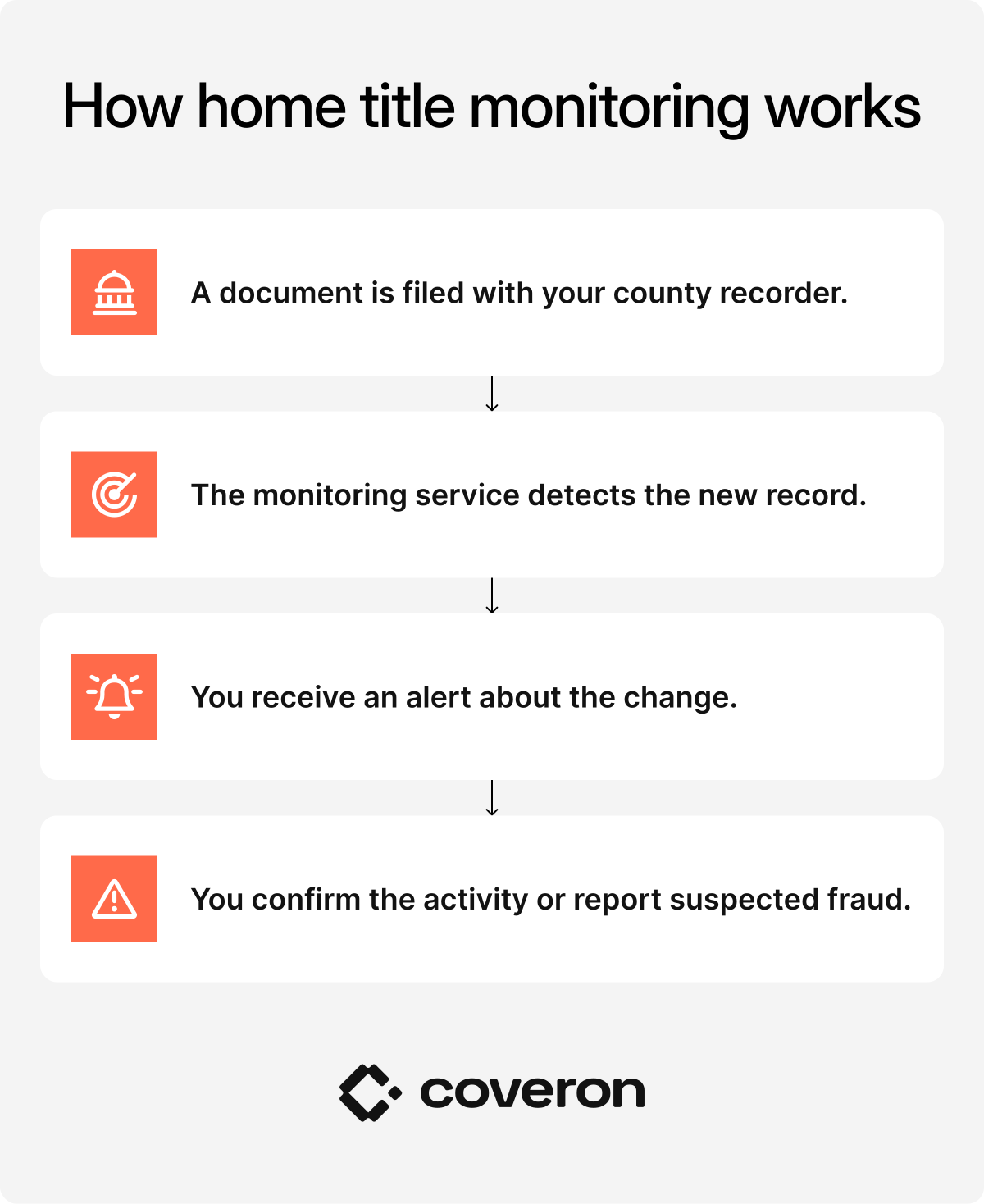
Home title monitoring services track property records maintained by county recorder or clerk offices. When they detect changes involving your property, they send an alert so you can check whether the activity is legitimate.
The process generally involves four steps:
- A document is filed with your county recorder. This document could be a deed transfer, mortgage, lien, or another recorded document.
- The monitoring service detects the new record. It checks available records for changes associated with your property or registered name.
- You receive an alert. Depending on the service, you may be notified by email, text message, or another supported channel.
- You confirm it or report it as fraud. If you didn’t authorize the filing, contact the recorder’s office and seek appropriate assistance.
Not every alert indicates fraud. A legitimate mortgage refinance, ownership update, or recorded lien could also trigger a notification.
The speed of alerts depends on the provider and how quickly the relevant county records and processes make documents available. Even services advertising continuous monitoring cannot detect a filing before the underlying information becomes accessible.
What home title protection can’t do
Home title protection can help you identify suspicious activity or manage recovery expenses, but it has limitations:
- It cannot stop someone from recording a forged document. Despite the name, a home title lock service doesn’t place a literal lock on your property records. County recording offices may accept documents that later turn out to be fraudulent.
- Monitoring only detects available information. A service may alert you after a document has been recorded, but it cannot guarantee that every suspicious filing will be detected immediately. Recording delays and incomplete digital records can affect notifications.
- It doesn’t automatically reverse fraudulent transfers. If someone records a forged deed, you may still need to contact the recorder’s office, report the incident, and seek legal assistance.
- It doesn’t replace traditional title insurance. An owner’s title insurance policy generally protects against certain ownership defects that existed before the policy date. Depending on its terms, it may also protect against specific post-policy fraud. Home title monitoring, meanwhile, alerts you to recorded changes. Coveron’s home title insurance benefit focuses on eligible recovery expenses after covered fraud.
- It doesn’t cover every type of identity theft. A title-only monitoring service won’t necessarily notify you about stolen credentials, fraudulent credit applications, or suspicious account activity. Understanding the differences between credit monitoring and identity theft protection can help you identify which safeguards you may be missing.
For these reasons, the best protection often involves several measures, like checking property records, using available county alerts, securing your identity, and understanding the insurance coverage you already have.
Get home title protection with Coveron
Home title fraud can leave homeowners facing unexpected legal and administrative expenses. Coveron’s home title protection helps with eligible recovery costs, while its broader identity protection features help you monitor potential identity and financial threats. With home title insurance benefits, dark web monitoring, credit monitoring, and identity theft recovery support, Coveron provides additional safeguards alongside your existing property monitoring arrangements.
Get monitoring, expert recovery help, and up to $2M for eligible recovery costs.
30-day money-back guarantee