What is child identity theft?
Child identity theft is a type of identity theft where someone steals a child’s personal information — like a name, date of birth, or SSN — to commit fraud, get a job, or receive services and government benefits. Children have no credit history and no debt, which is why criminals can easily exploit their identities for years.
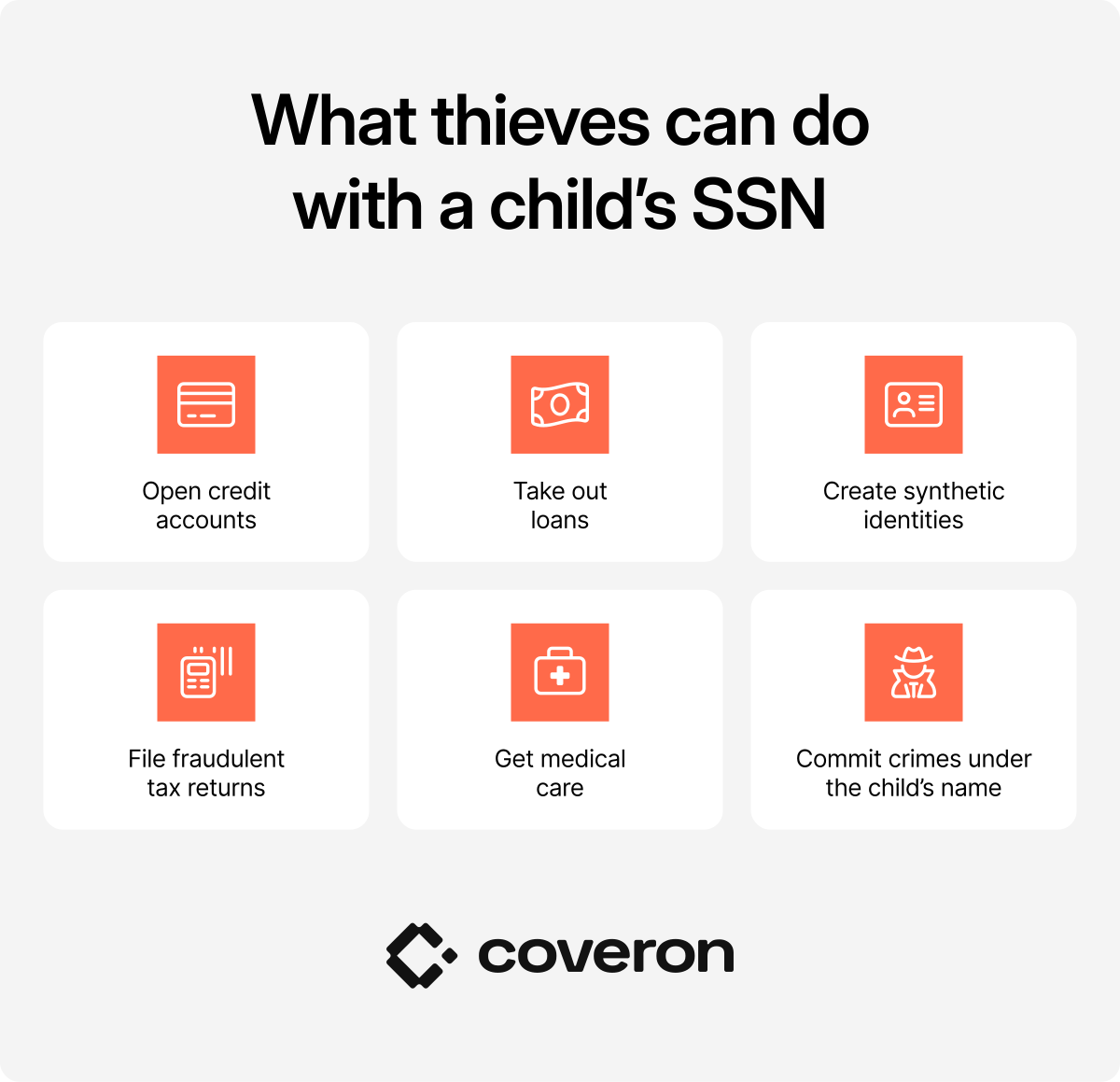
What identity theft looks like in practice depends on what the thief does after they’ve stolen the minor’s personally identifiable information. The criminal can:
- Commit financial identity theft, such as opening credit card accounts, taking out loans, or signing up for utilities and phone plans under the child’s name. Financial identity theft is the most common way to use a stolen SSN.
- Create a synthetic identity by combining the child’s real SSN with a fake name and date of birth to build a fake person on paper. Synthetic identity theft is hard to trace because the credit file belongs to someone who doesn’t really exist.
- File fraudulent tax returns. Criminals claim the child as a dependent or collect a refund using their SSN.
- Get medical care — like procedures or prescriptions — billed to the child’s identity.
- Commit crimes under the child’s name. Criminals may give the child’s details to the police or employers, leaving the minor with a record they didn’t earn. This is known as criminal identity theft.
The consequences of identity theft can take years to undo, which is why catching it early matters.
How does child identity theft occur?
Child identity theft can occur in more ways than most parents or caregivers expect. Sometimes it’s a stranger online, and sometimes it’s someone the family knows. Here are the most common scenarios:
- A family member uses the child’s SSN to open credit accounts or take out loans — often because their own credit is too damaged to meet issuing banks’ strict criteria.
- A data breach exposes the child’s data. Schools, doctors, and insurers all store children’s information, and a single data breach can put a child’s SSN up for sale on the dark web.
- Scammers target kids online through phishing links, fake giveaways, or “verify your account” messages in games and on social media to manipulate them into sharing their information.
- Documents get physically stolen. A stolen wallet, bag, or piece of mail can hand over a child’s Social Security card or birth certificate.
- People and institutions overshare forms. Schools, sports leagues, and medical offices often ask for an SSN they don’t really need — and every extra copy creates another risk of a leak.
The good news? Each of these scenarios leaves clues — and knowing the warning signs can help you catch child identity theft early.
What are the warning signs that your child’s identity has been stolen?
The main signs of child identity theft include unexpected mail or calls about accounts in your child’s name, denied government benefits, and IRS notices tied to their SSN.
Watch out for:
Pre-approved credit or insurance offers. Kids don’t get these unless someone is using their identity to build credit.
Bills or debt collection calls. Someone may have opened accounts in your child's name without your knowledge.
Denied government benefits. If your child’s SSN shows up as already in use, someone may have claimed benefits with it.
IRS notices. The IRS may flag unpaid taxes under your child’s SSN or say they were already claimed as a dependent on another return.
A credit report tied to your child’s SSN. Children under 18 shouldn’t have credit files, so any existing report is a red flag.
Medical bills or insurance statements. Charges for care your child never received mean someone is using their identity for medical services.
Employment records or tax forms. Someone may have used your child’s SSN to get a job, which is a form of employment identity theft.
One sign alone could be a paperwork error. Two or more signs of identity theft mean it’s time to check whether your child’s identity has been compromised.
How to check for child identity theft
To check for child identity theft, start by finding out whether your child has a credit report tied to their SSN. Children under 18 usually don’t have credit reports at all — the only common exception is if you’ve added your child as an authorized user to one of your own accounts. So if a credit bureau has a file on your child and you haven’t created one, that’s a strong sign something’s wrong.
You can’t pull a child’s report online the way you can your own. Instead, you need to ask each bureau to run a manual search of their database:
- TransUnion. Submit the Child Identity Theft Inquiry form opens in a new tab through their online platform — they’ll tell you whether a file exists.
- Equifax requires a Minor Credit Report Request Form opens in a new tab by mail with documents proving your identity and relationship to the child — check Equifax’s page for parents opens in a new tab to see what to include.
- Experian. Use their minor request page opens in a new tab to check for a credit report. You can also place a fraud alert through the same webpage.
In each case, be ready to provide the child’s birth certificate, Social Security card, and proof that you’re the parent or legal guardian. If all three searches come back clean, that’s good news — but it doesn’t mean you’re done watching.
What to do if your child’s identity is stolen
If you confirm that your child’s identity has been stolen, act quickly. Most damage can be undone if you follow these steps:
- Report it to the FTC. The first step is to report identity theft. Go to IdentityTheft.gov and file a report. It creates an official FTC Identity Theft Report and a personal recovery plan with pre-filled letters you’ll need for the next steps.
- Close the fraudulent accounts. Contact every company where an account was opened in your child’s name. Explain that the child is a minor and can’t legally enter into contracts, and ask them to close the account.
- Contact all three credit bureaus. Send each one a letter with the FTC’s Uniform Minor’s Status Declaration opens in a new tab asking them to remove all accounts, inquiries, and collection notices from your child’s file.
- Freeze your child’s credit. Contact each of the three major credit bureaus to freeze your child’s credit and stop anyone from opening new accounts with your child’s SSN.
- Implement a fraud alert. An initial fraud alert lasts one year and is free to renew. As a confirmed victim, you can get an extended alert that lasts seven years and entitles you to two free credit reports from each bureau.
- Handle tax fraud with the IRS. If someone filed taxes using your child’s SSN, contact the IRS. You can also get your child an IRS IP PIN — a six-digit code that blocks fraudulent returns.
- Check for employment fraud. Ask the Social Security Administration for Form 7050 opens in a new tab to see earnings reported under your child’s SSN.
- File a police report. Some companies and bureaus may ask for it, and it creates an official record of the crime.
- Keep detailed records. Save copies of every letter, email, and report in case the fraud resurfaces years later.
It takes persistence, but your child’s credit can be fully cleared — and once it is, a freeze keeps it that way.
How to protect your child from identity theft
Child identity theft prevention comes down to one habit: Treat your child’s personal information like cash — hand it out rarely, store it carefully, and check on it regularly.
Here’s what works:
- Keep the SSN safe. Your child’s SSN is the key to the rest of their information, so share it only when it’s truly required. You can find some practical tips in our blog post on how to protect your Social Security number.
- Push back on forms. If a school, doctor, or sports league asks for your child’s SSN, ask why they need it, how they’ll protect it, and whether a different identifier or just the last four digits will do. If the answers are vague, don’t provide it — many organizations ask out of habit, not necessity.
- Lock up and shred. Keep birth certificates, Social Security cards, and medical records in a locked drawer. Shred anything with personal details before throwing it out.
- Wipe old devices. Phones and laptops store more information than you may think — erase your data from them before selling or recycling them.
- Teach kids digital street smarts. Talk to your child about not sharing personal details in games, chats, or social media — and show them what a phishing link looks like.
- Think before you post. Birthdays, full names, school names, and photos can give thieves a head start to stealing an identity. Share less, or keep accounts private.
- Stay ahead of identity theft. Run an annual credit check with each bureau, freeze your child’s credit early (it’s free for under-16s) and consider identity theft protection services or dark web monitoring, which alerts you if your child’s data surfaces where it shouldn’t. Look for services like Coveron that offer identity theft protection for the whole family.
None of these steps take long to complete, and together they close most of the doors thieves use. For more on the topic, check out our blog post on how to prevent identity theft.
PRO TIP
Child identity theft protection works best when it covers the whole household. Coveron’s family identity theft protection monitors your child’s SSN, email address, and credit/debit card numbers for exposure and alerts you early so you can take care of leaks before they turn into big problems.
Get notified and act immediately.
30-day money-back guarantee
FAQ
References
- Identity Theft Resource Center (IRTC). (2026). Learn the Warning Signs of Child Identity Theft. Retrieved on August 7, 2026. Available at: https://www.idtheftcenter.org/post/warning-signs-of-child-identity-theft/ opens in a new tab
- Javelin Strategy & Research. (2026, October). Child Identity Fraud: The Perils of Too Many Screens and Social Media. Retrieved on August 7, 2026. Available at: https://javelinstrategy.com/sites/default/files/files/reports/22-5012J-FM-2022%20Child%20Identity%20Fraud%20Study.pdf opens in a new tab