What is employment identity theft?
Employment identity theft is a type of identity theft in which a bad actor uses your Social Security number (SSN) and other personal information to apply for a job under your name.
This situation can create problems with the Internal Revenue Service (IRS), the Social Security Administration (SSA), background check companies, and future employers.
Why do thieves commit employment identity theft?
Thieves commit employment identity theft to work, get paid, or pass checks they may not be able to pass under their own identity. In some cases, they use stolen information to hide their real name. In others, they may be trying to avoid tax, legal, or immigration-related problems.
Common reasons of committing employment identity theft include:
- To appear eligible for work. A thief may use someone else’s SSN to complete hiring paperwork or pass employment verification.
- To avoid a background check issue. Someone with a criminal record or poor work history may try to use another person’s identity to avoid scrutiny.
- To get hired for a role that requires credentials. A fraudster may use stolen information to access jobs, licenses, or professional records they don’t legally hold.
- To hide from law enforcement or debt collectors. Some identity thieves use another person’s information to avoid wage garnishment, legal obligations, or criminal records.
- To commit broader fraud. Once a thief has enough information to apply for jobs as you, they may also try to open accounts, file tax forms, or access other benefits in your name.
How does employment identity theft occur?
Employment identity theft happens when someone uses stolen personal information to get a job while pretending to be someone else. Criminals need to steal personal information before they can commit employment identity fraud. Some common ways they obtain this information include:
- Data breaches. If a company or service you use suffers a breach, criminals can access your personal information. They may then sell it, trade it, or use it to apply for jobs.
- Document theft. If your Social Security card, birth certificate, driver’s license, or passport gets lost or stolen, identity thieves could get enough information to impersonate you.
- Phishing. Scammers may use emails, texts, phone calls, or fake websites to trick you into sharing your personal or financial information. They may pretend to be the IRS, a recruiter, a job platform, or your employer. For example, you might receive a fake “tax verification” email asking you to confirm your SSN before payroll can be processed.
After an identity thief gets your information, they can use it to apply for jobs. Once they’re hired, they will receive paychecks, which can result in tax filing and legal issues, including tax complications and, in some cases, criminal identity theft, where actions of a person using your identity could be wrongfully attributed to you.
What are the consequences of falling victim to identity theft?
Falling victim to employment identity theft can lead to tax problems, incorrect wage records, background check errors, and reputational harm. The thief gets the job and the paycheck, but your name and SSN may be left tied to the records.
When employment identity theft occurs, the effects can show up in several areas:
| Consequence | What it means |
|---|---|
Work history discrepancy | A future employer may see work history that doesn’t match your resume. This situation can make it look like you’re hiding information, even when the record is fraudulent. |
Tax issues | The IRS may believe you failed to report income, even though the wages were earned by someone else. You may receive a notice, face refund delays, or need to prove the income was not yours. |
Retirement benefit errors | Fraudulent wages tied to your SSN may appear on your SSA Earnings Statement. Because Social Security retirement benefits are based on your earnings history, incorrect wages can affect benefit estimates and may need to be corrected before or during retirement. |
Medicare and benefit confusion | In some cases, income or work-history errors may affect notices related to Social Security benefits, Medicare eligibility, or income-based Medicare premiums. |
Reputational damage | If the impersonator was fired, performed poorly, or engaged in misconduct, those employment records may be wrongly associated with you. |
Credit issues | If a thief has your SSN, they may also they may also be able to open new accounts, take out loans, or apply for apartments in your name, which can negatively impact your credit score. |
How to tell if you’re a victim of employment identity theft
Employment fraud is hard to spot because it often appears in official records rather than everyday transactions. Look for these warning signs:
- A W-2 or 1099 tax form from an employer you don’t recognize. A W-2 reports wages from an employer, and a 1099 reports non-employee or contract income. Receiving either from an unfamiliar source may indicate your SSN was used for employment.
- An IRS notice about unreported income. A CP2000 notice listing wages you didn’t earn may mean someone used your SSN for work.
- Tax refund delays or rejections. This situation can happen if records tied to your SSN don’t match your actual income.
- Wages from an unfamiliar employer on your SSA Earnings Statement. Unaccounted-for wages may mean someone used your SSN on payroll paperwork.
- Jobs you never held appearing on a background check. Unfamiliar jobs may indicate that employment records have been incorrectly linked to your identity.
- Unfamiliar credit inquiries or accounts. Employment identity theft itself may not always show up on your credit report, but someone with your SSN may also try other forms of fraud.
It’s difficult to know if someone is using your SSN, but you must act quickly to minimize the damage if you believe you’ve fallen victim to employment identity theft.
What to do if you’re a victim of employment identity theft
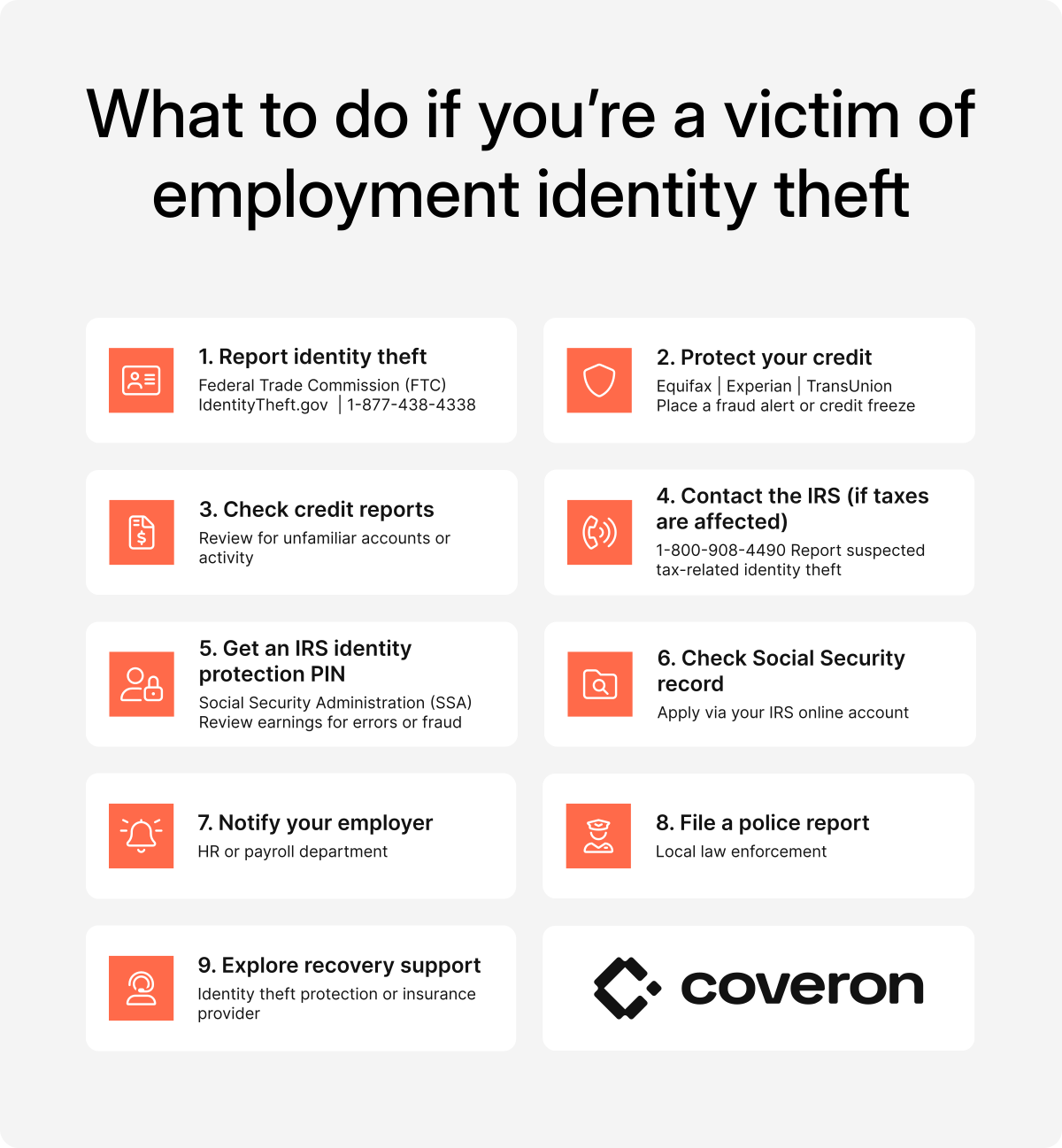
If your identity gets stolen for work purposes, act quickly. Follow these steps:
- Report identity theft to the Federal Trade Commission. Go to IdentityTheft.gov and create an identity theft report to get a recovery plan, checklists, and sample letters. You can also report identity theft by calling 1-877-438-4338.
- Contact the IRS if taxes are affected. If you received an IRS notice, follow the instructions on the notice and use the phone or fax number listed there. If you believe someone used your SSN to work, get your tax refund, or commit tax-related identity theft, you can also call 1-800-908-4490.
- Get an IRS Identity Protection PIN. An IRS IP PIN is a six-digit number that helps stop someone else from filing a federal tax return using your SSN or ITIN. The fastest way to get one is through your IRS online account.
- Notify the SSA. Create or sign in to your Social Security account and review your Earnings Statement. If you see wages you didn’t earn, report the inconsistency to the SSA.
- Contact the three major credit bureaus and request to set up a fraud alert or credit freeze. A fraud alert tells creditors to take extra steps before opening accounts in your name. A credit freeze restricts access to your credit report, making it harder for someone to open new credit using your identity. For exact steps, see Coveron’s guide on how to freeze your credit.
- Check your credit reports. Review your reports from Equifax, Experian, and TransUnion for accounts, credit inquiries, addresses, or personal details you don’t recognize.
- Notify your employer. If you think your current or former employer’s records were compromised, tell HR or payroll. They may need to investigate a data breach, secure employee records, or issue guidance to other affected workers.
- Notify the police. File a police report with local law enforcement so that they can investigate the theft.
- Explore recovery options. If you use an identity theft protection service, see if it offers identity theft insurance and consider filing a claim.
The sooner you act, the less damage the identity thief can do. If you’d like to learn more, you can take a look at our guide on what to do if your identity is stolen.
How can you prevent employment identity theft?
You can help prevent employee identity theft by protecting your SSN, securing the accounts that hold sensitive information, and checking official records for signs of misuse. Prevention matters because this kind of fraud is often found late.
Use these security best practices to help protect your personal and financial information:
- Protect your SSN. Don’t carry your Social Security card unless you need it that day. Don’t share your SSN by email or text. Ask why it’s needed, how it will be stored, and whether you can use another identifier.
- Secure your online accounts. Protect email, banking, tax, payroll, and government accounts with strong passwords and two-factor authentication (2FA).
- Stay safe on public Wi-Fi. If you use Wi-Fi to send personal information or log in to sensitive accounts, like online banking, make sure you use a VPN. You can also take a look at our guide to learn whether online banking is safe in general.
- Lock your Social Security number with E-Verify Self Lock. Self Lock helps prevent someone from using your SSN in E-Verify or Self Check.
- Get an IRS IP PIN. It helps prevent tax-related identity theft by blocking fraudulent federal tax returns filed under your SSN.
- Monitor your SSA Earnings Statement. Check your record at least once a year, especially before tax season or if you receive any suspicious IRS or SSA notices.
- Check your credit reports. You can get free credit reports from major credit bureaus once a week. They can reveal employment-related identity theft, such as the creation of new accounts or unfamiliar inquiries.
- Use identity theft protection. Identity theft protection services like Coveron aren’t just for identity theft recovery — they help prevent identity theft as well. For example, credit monitoring and 24/7 dark web monitoring features alert you when your information appears in places where it shouldn't.
How can Coveron help you prevent employment identity theft?
Coveron helps monitor for signs that your identity may be at risk, including exposed personal information, dark web activity, and credit-related changes. These alerts are especially useful if your SSN or other sensitive data appears on the dark web after a breach.
If employment identity theft does happen, Coveron also helps you understand what changed, what to secure, and which next steps to take. That matters because employment identity theft often affects several systems at once: taxes, Social Security records, credit, and background checks.
How can employers prevent employment identity theft?
While individuals should do everything they can to safeguard their personal data, employers also play a critical role in preventing employment identity theft. Employers should take the following steps to protect their employees’ data:
- Store data securely. Digital data should be protected with cybersecurity protocols like encryption, firewalls, and access control systems.
- Conduct background checks on job applicants. Before you hire a new employee, conduct a thorough background check, especially if they will be handling sensitive information. This step can also help you identify and avoid hiring an employment identity thief.
- Provide employment identity theft training. Educate your employees about employment identity theft and share some best practices for keeping employee, client, and company data safe.
- Offer identity protection as a benefit. Providing employees with identity monitoring and recovery support helps employers detect fraud earlier and reduce its impact. Learn more by reading our post called Identity theft protection as an employee benefit explained, which covers the topic in detail.
For the highest levels of security, look into Coveron, a comprehensive identity theft protection service.
Protect employees from identity theft
30-day money-back guarantee
FAQ
References
[1]: Consumer Sentinel Network Data Book 2024, https://www.ftc.gov/reports/consumer-sentinel-network-data-book-2024 opens in a new tab