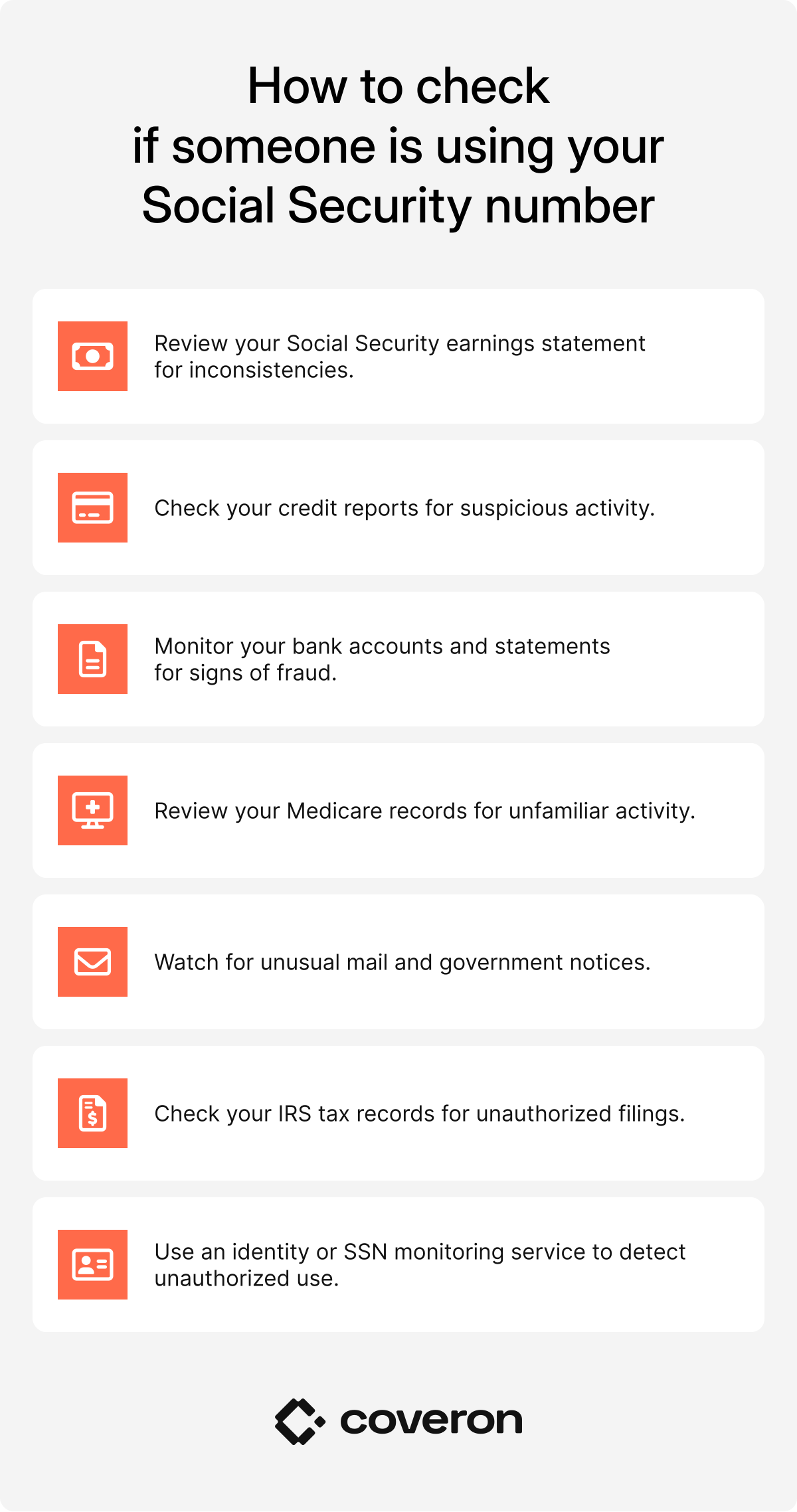
Review your Social Security earnings statement
One of the most reliable ways to check whether someone is using your SSN is to review your Social Security statement. If an identity thief uses your SSN to get a job, those wages may appear in your earnings history even though you never worked there.
Create or sign in to your mySocialSecurity account and review your Social Security statement online. Pay close attention to your reported earnings, employers, and estimated Social Security benefits. Look for:
- Employers you don’t recognize.
- Income you never earned.
- Incorrect earnings for previous years.
- Benefits or work history that doesn’t match your records.
Employment fraud doesn’t just affect your taxes — it can also hurt your future Social Security benefits if your earnings record is inaccurate. If you find unfamiliar employers or wages listed in your account, contact the Social Security Administration as soon as possible so it can review your earnings record. If someone is using your SSN for employment, the SSA can correct your record after investigating the discrepancy. You should also review your other personal information to make sure nothing else has changed without your knowledge.
Check your credit reports
Your credit report is often one of the first places where identity theft appears. When you review your report:
- Verify your personal information, including your name, address, and other identity details.
- Look for unfamiliar accounts or credit cards you didn’t open.
- Review hard inquiries for credit applications you didn’t authorize.
- Check for unexpected changes to your contact information or a sudden drop in your credit score.
You can request free credit reports from the three major credit bureaus through AnnualCreditReport.com. If you spot suspicious activity, contact the lender, dispute the account, and consider placing a fraud alert or credit freeze with the major credit bureaus.
If you’d rather not rely on manual checks, a credit monitoring service can watch your credit continuously and notify you of important changes. You can also learn how to spot identity theft by looking at the personal section of your credit report, where unexpected changes to your identity details often appear before fraudulent accounts do.
Monitor your bank accounts and statements
Even if no new credit accounts have been opened, someone using your SSN may still gain access to your financial information. That’s why it’s important to routinely review your bank statements and account activity for signs of fraudulent activity:
- Review recent transactions for purchases, withdrawals, or transfers you don’t recognize.
- Check for small “test” charges that fraudsters sometimes make before attempting larger transactions.
- Verify that no new payees or linked bank accounts have been added without your permission.
- Turn on real-time fraud alerts through your bank or financial institution so you’re notified immediately of suspicious transactions.
- Contact your bank right away if you notice unauthorized activity, freeze affected cards if necessary, and dispute any fraudulent charges.
Checking your accounts only takes a few minutes, but it can help stop identity thieves before they cause more serious financial damage.
Review your Medicare records
If you’re enrolled in Medicare, reviewing your claims history is another way to check whether someone is using your Social Security information. Medical identity theft can result in false medical records, unexpected medical bills, and fraudulent insurance claims:
- Check your Medicare Summary Notices (MSNs) or Explanation of Benefits (EOBs).
- Log in to your Medicare online account and review recent claims.
- Look for doctors, treatments, prescriptions, or medical equipment you never received.
Report Medicare scams to Medicare by calling 1-800-633-4227 or through the U.S. Department of Health and Human Services’ Office of Inspector General.
Watch for unusual mail and government notices
Sometimes your physical mail indicates something is wrong before your credit report does. If someone is using your SSN, you may receive official notices, unfamiliar bills, or letters about accounts you never opened.
Don’t ignore unexpected mail. Instead, contact the official sender directly using contact information from its website rather than any phone number listed in a suspicious letter. You should also log in to your IRS or Medicare accounts to confirm whether the notice is legitimate and report online any confirmed fraudulent activity.
Watch for:
- W-2 forms from employers you’ve never worked for.
- IRS letters about a tax return you didn’t file.
- Medicare notices for healthcare services you never received.
- Collection notices from debt collectors for unknown debts.
- Credit card statements for new accounts you never opened.
- Strange bills or junk mail related to unfamiliar financial products.
- Official notices about unemployment benefits you never claimed.
If you receive an IRS notice related to possible tax fraud, contact the Internal Revenue Service (IRS) at 1-800-908-4490.
Check your IRS tax records
Tax fraud is another common form of identity theft. If someone steals your SSN, they may file a fraudulent tax return, claim your tax refund, or use your information for employment-related abuses involving taxes.
The good news is you don’t have to wait until tax season to check. You can request an IRS tax transcript to review the wages and tax information reported under your name. Take the following steps:
- Compare the reported wages with your own employment records.
- Look for employers you don’t recognize.
- Contact the Internal Revenue Service right away if you believe someone has filed a fraudulent tax return using your information.
- Follow the IRS instructions for reporting tax-related identity theft.
Acting quickly can help prevent delays to your tax refund and reduce the risk of additional financial or legal complications.
Use an identity or SSN monitoring service
Checking everything manually works, but it takes time and relies on you noticing every warning sign yourself. An identity theft protection service can continuously monitor your information and alert you when it detects changes.
Many services combine SSN monitoring, credit monitoring services, dark web monitoring services, and account alerts in one dashboard, making it easier to detect potential fraud early.
For example, an identity theft protection service may notify you if:
- Someone applies for credit using your SSN.
- Your personal information appears in data breaches or after a major data exposure.
- Your SSN was found on the dark web.
- Your credit file changes unexpectedly.
- New accounts appear in your name.
These tools don’t prevent identity theft, but they can help you respond much faster if someone starts using your SSN or your sensitive information is exposed.
What to do if your Social Security number has been compromised
If you discover that someone has your Social Security number, don’t panic, but don’t wait either. Acting quickly can limit the damage and make recovering from identity theft much easier.
Check the table below for a quick cheat sheet on what to do if someone has your SSN.
| Action | Why does it help? | When should you take it? | |||
|---|---|---|---|---|---|
|
|
| |||
|
|
| |||
|
|
| |||
|
|
| |||
|
|
| |||
|
|
| |||
|
|
| |||
|
|
| |||
|
|
|
Remember that recovering from identity theft often takes time. Keep copies of emails, letters, case numbers, and supporting evidence throughout the process in case creditors, insurers, or government agencies request additional documentation later.
How to prevent the misuse of your Social Security number
While you can’t completely eliminate the risk, a few simple habits can make it much harder for criminals to steal or misuse your information. Below are some practical ways to protect your Social Security number:
- Only share your SSN when it’s legally required. Before providing it, ask why it’s needed, how it will be stored, and whether another identifier would work instead.
- Create your mySocialSecurity account before someone else does so in your name. This gives you access to your Social Security account and helps protect your earnings record.
- Review your credit report regularly or use credit monitoring services to receive alerts about important changes to your credit history.
- Store your Social Security card, tax documents, and other paperwork containing sensitive information in a secure place instead of carrying them in your wallet.
- Turn on account alerts through every financial institution you use so you’re notified about unusual logins or transactions.
- Watch for data breaches involving organizations that store your personal data. If your information is exposed in a recent data breach, change passwords and closely monitor your financial accounts.
- Consider using a dark web monitoring service that alerts you if your SSN is found on dark web marketplaces or other criminal forums.
- If someone continues to misuse your stolen SSN despite your protective measures, follow official SSA guidance before considering whether you can change your SSN. The SSA only approves new numbers in exceptional circumstances involving ongoing misuse.
Staying proactive is the best defense. Continuous monitoring makes it much easier to detect identity thieves before they can open bank accounts, obtain credit cards, or cause lasting damage to your finances.
Coveron monitors your SSN and alerts you to unauthorized new credit inquiries and accounts.
30-day money-back guarantee