Why is a Social Security number important?
The Social Security number was originally designed to track earnings and calculate retirement benefits. Over time, it evolved into a de facto national ID, used by the government as well as banks, healthcare providers, schools, and employers. You need it for everything from filing taxes and applying for a mortgage to getting a new job or driver's license. That makes it both essential and vulnerable.
Because it links to nearly every part of your identity, your SSN is a prime target for identity theft. Once it’s compromised, containing the damage may be incredibly difficult. It also may not be obvious right away — scammers are often careful, playing the long game.
Although the Social Security Administration (SSA) has promoted alternatives to reduce reliance on SSNs, the reality is that most systems still depend on them. From hospitals to hiring websites, the number remains central to record-keeping, and that means the risk remains, too.
What can someone do with your Social Security number?
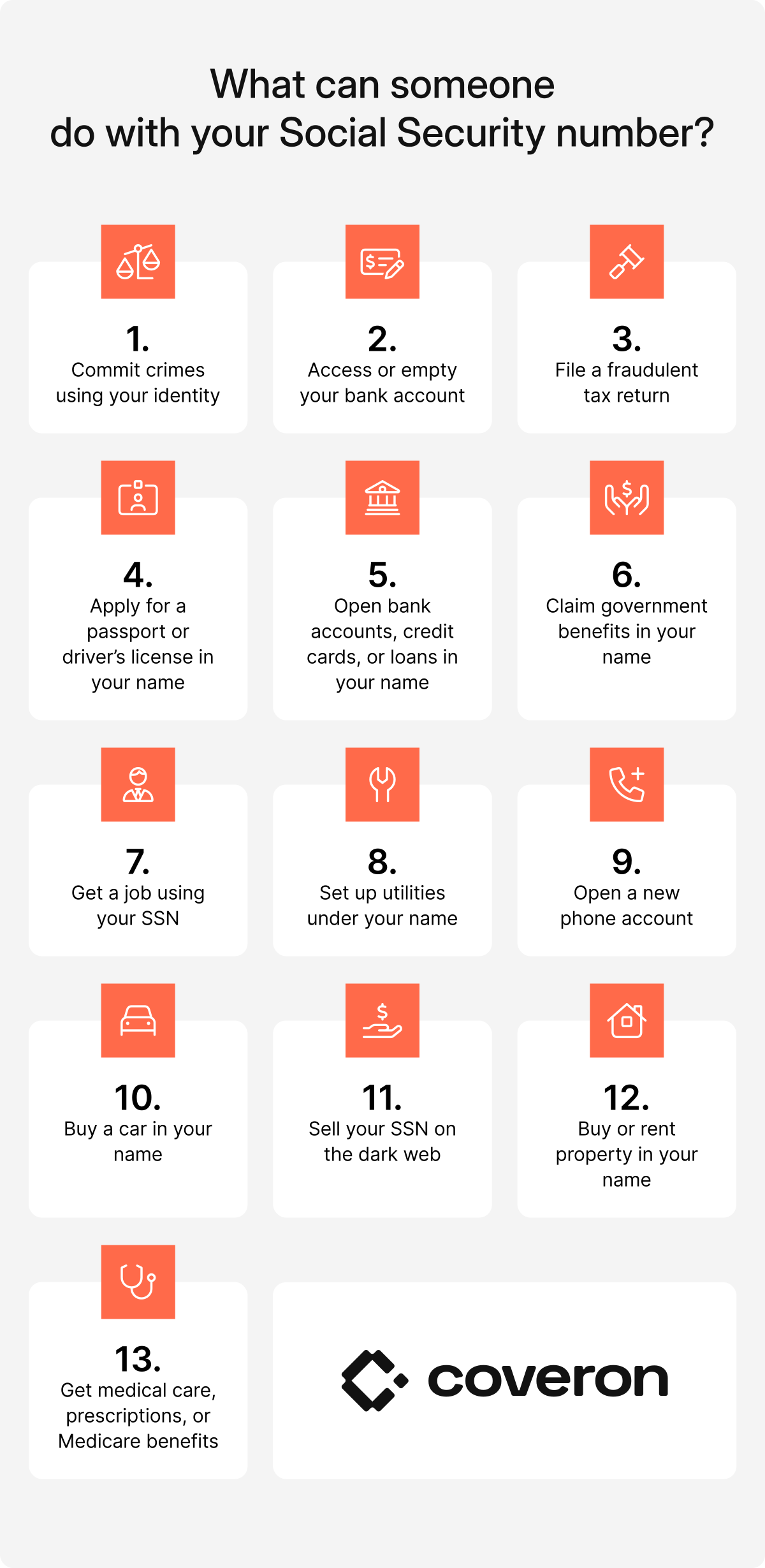
Stolen SSNs are used in many different ways to commit fraud. Someone with your SSN may try to:
- Open bank accounts, credit cards, or loans in your name.
- Access or empty your bank account.
- File a fraudulent tax return.
- Apply for a passport or driver’s license in your name.
- Commit crimes using your identity.
- Claim government benefits in your name.
- Get a job using your SSN.
- Set up utilities under your name.
- Open a new phone account.
- Buy a car in your name.
- Use your identity to get medical care, prescriptions, or Medicare benefits.
- Buy or rent property in your name.
- Sell your SSN on the dark web.
Each of these risks is covered in detail below.
Open new bank accounts, credit cards, or take loans in your name
One of the most common ways thieves can use your SSN is to apply for financial products in your name. That may include credit cards, personal loans, bank accounts, buy now, pay later accounts, store cards, or lines of credit.
Many lenders and financial institutions use your SSN, name, date of birth, and address to verify your identity. If a criminal has enough details, they may pass an application check or answer security questions. Sometimes they use a fake email address, a prepaid phone number, or a different mailing address so account activity doesn’t reach you immediately.
If you suspect this has happened, read our guide on how to check if someone opened an account in your name.
Empty your bank account
With your SSN and other personal information (like your name and date of birth), criminals can potentially gain access to your bank accounts. They may use phishing or social engineering to bypass security questions, reset login credentials, and withdraw money. They can even reroute direct deposits and set up fraudulent transfers.
File fraudulent tax returns
Tax identity theft is one of the most common and damaging ways stolen Social Security numbers are used. Someone with your SSN can file a fraudulent tax return in your name and claim a refund. You may only find out when the IRS rejects your legitimate tax return — or worse, accuses you of underreporting income or tax evasion.
PRO TIP
Filing your tax return early is one of the simplest ways to reduce the risk of this type of social security fraud. If your legitimate return reaches the IRS first, a scammer has less opportunity to file before you.
Obtain a passport or a driver’s license in your name
An SSN alone isn’t usually enough to obtain a passport or driver’s license, but it can be part of a larger identity fraud attempt. A criminal may pair your SSN with a stolen or fake birth certificate, driver’s license, utility bill, address, or other supporting documents to apply for government-issued ID in your name.
This type of fraud can have serious consequences. Fraudulent identity documents may be used for travel, to evade law enforcement, to open financial accounts, to rent property, or to pass background checks. If crimes or debts are linked to that ID, clearing your name can be stressful and time-consuming.
Commit crimes in your name
When someone uses your SSN while committing a crime, you become a victim of criminal identity theft. A fraudster may give your information to law enforcement during a traffic stop, arrest, or investigation, effectively transferring the record of their actions to you. This misuse will most likely lead to a criminal record in your name — something that will show up in background checks and complicate everything from job applications to housing approvals.
Receive benefits in your name
An identity thief can use your SSN to receive benefits and payments. These may include unemployment, disability, food assistance, and Social Security benefits. Such fraud not only costs taxpayers money — it can also delay or reduce your own access to programs you may need one day.
Get a job in your name
Employers use your Social Security number to report income and verify your identity. Someone with your SSN can get a job under your name, leading to tax issues, wage discrepancies, and problems with the IRS. This tactic is called employment identity theft.
If multiple people are using your SSN, your earnings history and benefits eligibility could be compromised.
Set up utilities
It may seem minor, but setting up utility accounts for electricity, water, or internet service in someone else’s name is a common scam. You may not realize anything’s wrong until unpaid bills show up in your credit report or collectors call you for charges you never made.
Open a new phone account
Scammers can also use your SSN to open a mobile phone account or finance expensive devices in your name. Phone account fraud is especially common because phones can be resold quickly, and the account may not be discovered until bills are overdue.
The impact can go beyond unpaid charges. A phone account in your name may end up in collections, damage your credit, or cause confusion with identity verification. In some cases, phone fraud involves SIM swapping, where scammers try to take control of a phone number to intercept verification codes.
Buy a car in your name
Buying or financing a car requires more than just an SSN, but a stolen SSN can be one part of an auto loan fraud attempt. A criminal may combine your SSN with fake pay stubs, a stolen driver’s license, a fabricated address, or other documents to apply for financing.
If the loan is approved, you may face missed payments, collection activity, damaged credit, or legal notices tied to a vehicle you never bought. Auto loan fraud is hard to spot quickly because you may not receive paperwork if the scammer used a different mailing address.
Perform medical identity theft
Medical identity theft involves using your Social Security number to access health care or insurance coverage. It can affect both private insurance and public programs like Medicare.
Scammers may receive medical care, surgery, or prescriptions using your benefits. That not only drains your health insurance allowances but may also corrupt your medical records, which can lead to misdiagnosis or denied coverage. If you suspect something’s off (like unexpected medical bills or unfamiliar insurance claims), request a copy of your medical records and report fraud to the Federal Trade Commission (FTC).
Buy or rent property in your name
Criminals can use your SSN, identity details, and fabricated supporting documents to rent apartments, apply for mortgages, or pass tenant screening. A landlord or lender may rely on your SSN to run a credit check, confirm identity, or review your financial history.
The damage can be long-lasting. Unpaid rent, property damage, eviction records, mortgage debt, or legal disputes may appear under your name. You may only find out when a landlord rejects your rental application, a lender questions your credit history, or you receive collection notices for an unknown address.
Sell your SSN on the dark web
Scammers don’t always use stolen SSNs themselves. They may sell them to other criminals. Stolen SSNs are often packaged with other personal data and sold in bulk on dark web marketplaces. These packages are sometimes called “fullz” because they contain a fuller identity profile, such as a person’s name, date of birth, address, and Social Security number.
How someone can steal your Social Security number
Someone can steal your Social Security number through data breaches, phishing scams, stolen documents, unsafe online forms, or intercepted internet traffic. It may be exposed by an organization, tricked out of you by a scammer, or pulled from physical paperwork.
Data breaches
Banks, employers, healthcare providers, and government agencies often store large amounts of personal data, including your SSN, which makes it vulnerable when those organizations are hit by data breaches. Whether caused by human error or a targeted cyberattack, a breach can expose your SSN and other personal details to hackers.
Criminals search for this kind of data, often buying it in bulk to commit fraud, open fake accounts, or sell it to others. To find out if your SSN has been exposed, consider using a dark web monitoring service that flags potential data breaches in real time. If you’d like to learn more, take a look at our guide on what to do if your SSN is on the dark web.
Phishing attacks
Phishing is one of the most common tactics used to steal SSNs. In this type of scam, attackers pose as trusted organizations — like a bank, the IRS, or your employer — and send emails or texts that look legitimate. These messages often include links or attachments designed to trick you into clicking.
Once you do, you may be taken to a fake website that looks real but is built to steal your information. Or worse, you may unknowingly install malware on your device. These spoofed sites and emails often ask for personal details, including your Social Security number, under the guise of account verification, fraud alerts, or urgent requests.
Phishing isn’t limited to email. Smishing uses text messages, while vishing uses phone calls or voicemail. In each case, the goal is the same: to pressure you into sharing your SSN, login details, verification codes, or financial information.
Physical theft
Not all identity theft happens online. Some criminals still rely on low-tech methods to get your Social Security number, like stealing physical documents. They may rummage through the trash, looking for discarded bank statements, medical bills, or anything else with your SSN on it. Others target wallets, purses, or other personal belongings, hoping to find Social Security cards, driver’s licenses, or financial documents.
Even something as routine as leaving paperwork in your car or tossing an official letter in the recycling bin without shredding it can give someone the opening they need. To lower your risk, store important documents securely and shred important documents with sensitive information before throwing them away.
Man-in-the-middle attacks
Man-in-the-middle attacks occur when someone intercepts your data as it travels between your device and a website or service. These attacks are especially common on unsecured public Wi-Fi networks (like those in cafes, airports, or hotels), where your connection isn’t encrypted.
In an MITM attack, a criminal positions themselves between you and the network, quietly capturing any information you send. If you enter your Social Security number on a website or send it through a form while connected to an unsecured network, they can see and steal it in real time.
What to do if someone has your Social Security number
If someone has your Social Security number, start by freezing your credit, placing a fraud alert, reviewing your credit reports, reporting identity theft, and checking your tax, bank, benefits, and Social Security records. The goal is to stop new fraud, spot existing misuse, and create a clear paper trail.
- Report identity theft. File a report with the Federal Trade Commission (FTC) at IdentityTheft.gov. The site will help you create a recovery plan and an identity theft report, which you may need when disputing fraudulent accounts.
- Initiate a credit freeze. A credit freeze makes it harder for someone to open new credit accounts in your name. You need to freeze your credit separately with Equifax, Experian, and TransUnion. It’s free, and you can temporarily lift the freeze when you need to apply for legitimate credit.
- Place a fraud alert. A fraud alert tells lenders and creditors to take extra steps to verify your identity before opening a new account. You only need to contact one of the three major credit bureaus, and that bureau should notify the other two.
- File a police report. A police report gives you an official record that your identity was misused. Be ready to provide documentation: a government-issued photo ID, proof of address, the FTC identity theft report, and any evidence of the fraud.
- Contact your banks, lenders, and credit card companies. Let your financial institutions know that your SSN may be compromised. Ask them to check recent activity for unauthorized transactions, secure your existing accounts, and flag suspicious requests, such as password resets or changes to contact details.
- Notify the Internal Revenue Service (IRS). This step helps prevent someone from filing a false tax return using your information.
- Review your Social Security records. Create or sign in to your my Social Security account and review your earnings record. If you see wages from an employer you don’t recognize, someone may be using your SSN for employment.
- Lock down your SSN. You can use myE-Verify Self Lock to help prevent your SSN from being misused in E-Verify employment checks. Remember to unlock it before starting a new job with an employer that uses E-Verify.
- Keep monitoring for new warning signs. SSN misuse can happen weeks or months after your information is exposed, so keep an eye on your accounts even after the first cleanup steps are done.
- Sign up for an identity protection service. It will help you monitor for signs that your SSN and other personal information may be at risk.
For more details, read our full guide on what to do if someone has your Social Security number.
If you’re unsure how to know if someone is using your Social Security number, start by monitoring your credit reports, bank activity, IRS notices, and unexpected bills or collection letters.
What can you do to protect your Social Security number?
To protect your SSN, limit who you share it with, shred sensitive documents, use strong passwords, turn on MFA, and watch for data breach or dark web alerts. You can’t remove all risk, but you can make your SSN much harder to misuse.
These steps will help reduce the risk of misuse and identity theft:
- Keep your Social Security card at home. You don’t need to carry the physical card with you daily. Store it in a secure place.
- Limit sharing your Social Security number and other sensitive information. If you’re asked for it, don’t hesitate to ask why it’s needed, how it will be stored, and who will have access. You can often provide the last four digits rather than the full Social Security number.
- Shred documents with your SSN before discarding them. This includes tax documents and insurance forms that could be pieced together to impersonate you.
- Use strong passwords for your online accounts, especially those tied to your financial, tax, or healthcare information. Avoid reusing passwords across sites.
- Turn on multi-factor authentication (MFA) where available. MFA adds an extra step to the login process, making it harder for anyone to access your accounts even if they have your password.
- Regularly check your credit reports through AnnualCreditReport.com. Look for unfamiliar accounts, hard inquiries you don’t recognize, or errors in your personal information.
- Create a personal "my Social Security account" at ssa.gov. This step gives you direct access to your earnings and benefits information and helps you spot any unusual activity, such as someone fraudulently using your Social Security number for employment.
- Review your Social Security statement to make sure your earnings history is accurate. If someone is using your SSN to work under a false identity, it may show up here.
- Learn how to check if someone has opened an account in your name. Regular credit monitoring or identity protection services can alert you to fraudulent activity before it causes real damage.
- Be cautious of phishing emails or phone calls. Never give out personal info unless you’re sure who you’re talking to.
- Consider an identity theft protection service. Services like Coveron track your SSN immediately, check your credit reports, monitor the dark web for exposure, send you data breach alerts, and provide expert identity theft recovery support if you ever need it.
Additionally, you can take a look at our guide and learn more tips on how to protect your Social Security number.
How Coveron protects your SSN
Coveron helps you monitor for signs that your SSN and other personal information may be at risk. It helps track dark web exposure, sends alerts about possible data breaches, provides credit monitoring, and offers identity theft recovery support if your information is misused.
Identity protection is important because SSN misuse can affect more than one part of your life. A stolen number may be used to apply for credit, open fraudulent accounts, file tax returns, pass employment checks, claim benefits, or access medical services. Coveron’s early warnings help you act quickly, limit the damage, and avoid finding out only after collection letters arrive.
Coveron watches credit and short-term loan activity and alerts you when new applications appear.
30-day money-back guarantee