What is a pig butchering scam?
A pig butchering scam is a long-running investment fraud in which scammers build a fake relationship with the target and gradually manipulate them into “investing” money on a fraudulent platform. Scammers may try to establish friendly, romantic, or professional connections, all in hopes of gaining the victim’s trust.
Pig butchering scams first appeared in China around 2016, before spreading across Southeast Asia, where they’re now industrialized inside large, fortified compounds. Many of these operations rely on trafficked workers forced to run scripts against thousands of targets a day, which is partly why pig butchering has scaled so aggressively in such a short period of time.
Unlike haste-based phishing attempts, these schemes unfold slowly, sometimes over weeks or months. Instead of trying to evoke excitement or a sense of urgency, scammers carefully “fatten up” their victims with attention and affection before convincing them to pour their savings into a bogus investment firm or platform.
Based on the description, you may have already picked up some similarities to romance scams or investment scams. And you’re not wrong, since pig butchering scams are a combination of both, making them difficult to spot. Scammers can be very convincing in their friendly act, sharing fake life stories, inquiring about the target’s personal life, or even offering emotional support. After a while, fraudsters invite their targets to invest in seemingly legit crypto platforms, leading to severe money loss or even financial identity theft.
Why is it called “pig butchering scam”?
The name “pig butchering scam” is a direct translation of the Chinese phrase “shā zhū pán” (杀猪盘), which literally means “pig butchering scam” or “pig slaughter scam.” This metaphor describes the scammers’ methodical approach: Just as a farmer fattens up a pig before slaughter, fraudsters spend weeks or months “feeding” the target with affection, attention, and small investment wins before going in for the “butchering” — convincing them to transfer their entire life savings.
The scale of the problem: Alarming pig butchering scam statistics
Pig butchering is no longer a niche scam — it’s one of the most lucrative forms of online crime in the world. And the numbers support that statement. Various cybersecurity researchers have confirmed that pig butchering scam numbers are skyrocketing, with tens of billions of dollars in the loss column already.
| Statistic | Figure | Source |
|---|---|---|
Total scam losses reported to the FBI’s IC3 in 2025 | $20.9 billion (a 26% jump year-over-year) | FBI IC3 2025 Annual Report [1] |
Cryptocurrency-related losses reported to IC3 in 2025 | $11.3 billion (a 22% increase from 2024) | FBI IC3 2025 Annual Report [1] |
Crypto investment fraud losses in the US during 2025 | $7.2 billion (a 25% increase from 2024) | FBI IC3 2025 Annual Report [1] |
Estimated global losses to pig butchering scams through January 2020-February 2024 (cumulative) | More than $75 billion | University of Texas study, reported by TIME [2] |
Estimated losses by Americans to Southeast Asia–based scams in 2024 | At least $10 billion | US-China Economic and Security Review Commission [3] |
Estimated total stolen in crypto scams and fraud in 2025 | $17 billion (record high) | Chainalysis 2026 Crypto Crime Report [4] |
While not every dollar in these reports comes from pig butchering specifically, investment fraud (fueled largely by this scam) has consistently been the single largest category of losses for several years running. This scale of damage is why understanding how the pig butchering scam works is becoming increasingly important.
How does a pig butchering scam work?
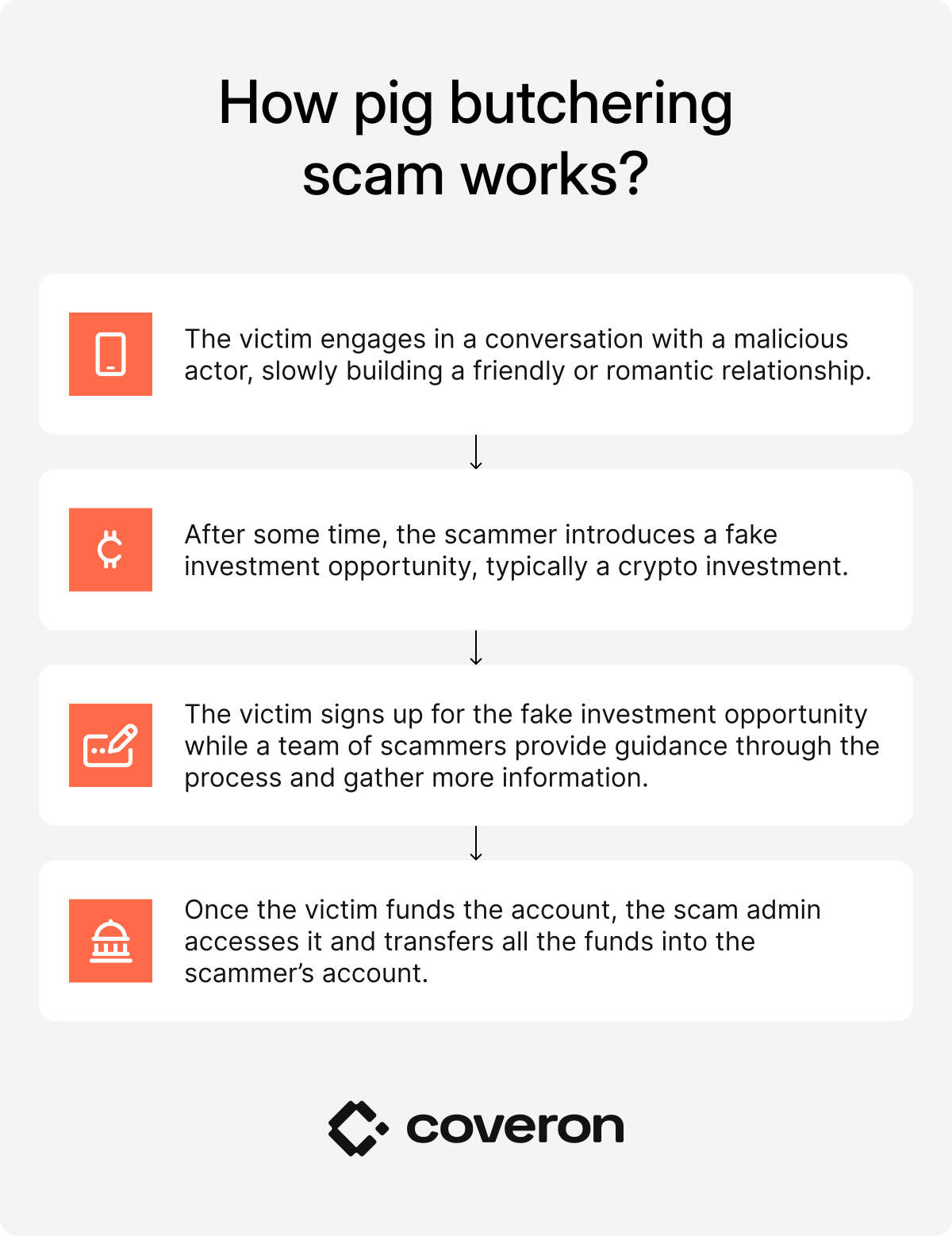
The details of pig butchering tactics may differ, but the scammers’ overall strategy stays consistent. Most cases follow the same six stages, with malicious actors patiently moving the target from one phase to the next. These stages include:
- First online contact
- Building trust
- Introducing the investment
- Providing the initial win
- Collecting money
- Disappearing
Stage 1: First online contact
Similar to social media scams, a pig butchering scam usually starts with unsolicited text messages. They might come through a dating app, a social media platform such as LinkedIn, or a messenger like WhatsApp. One of the most common openings is the “wrong number” pretext — a friendly text asking to confirm a hair appointment or a dinner reservation. When the target politely replies that the number is wrong, the scammer apologizes and keeps the conversation going, slowly building a relationship.
Stage 2: Building trust
Over the next few days or weeks, the scammer invests heavily in building rapport. They check in every morning, share daily photos (often stolen from real social media profiles), discuss hobbies, careers, and family, and slowly establish themselves as a meaningful person in the target’s life. The goal at this stage is purely to build trust, so scammers don’t mention money or investments.
Stage 3: Introducing the investment
Once the scammer feels like they’ve established trust, they casually shift the conversation toward money and investments. It can start with small mentions of successful crypto trading, a “rich uncle” with insider knowledge, or a private investment platform that has generated huge returns. It all happens slowly without any pressure or immediate solicitation — scammers simply pretend to share their good fortune, building curiosity over time.
Stage 4: Providing the initial win
Once the scammers feel the timing is right, they invite the target to “try” the platform/investment opportunity with a small deposit. The platform might look polished, display a real-time portfolio, and show the investment growing rapidly. The victim may even withdraw a small profit, which seemingly proves “the system works.” This is the most psychologically powerful stage, with the successful withdrawal turning skepticism into confidence.
Stage 5: Collecting money
With the target convinced, the scammer encourages larger deposits. Friends or “investment group chats” may appear on Telegram or WhatsApp, all enthusiastically reporting their own gains. The victim drains savings, takes loans, and sometimes borrows from family. The dashboard keeps showing massive profits, but every dollar transferred is already gone.
Stage 6: Disappearing
When the victim tries to withdraw a large sum, the platform suddenly demands a “tax,” “fee,” or “verification deposit” before releasing the funds. Each fee leads to another, until the victim finally refuses or runs out of money. At that point, the scammer goes silent, the platform vanishes, and the romantic partners/online buddies are never heard from again.
Notable pig butchering scam examples
Pig butchering scams can be devastating. Some of the real-world examples more than prove it:
- The San Jose widow who lost nearly $1 million. As reported by ABC7 News [5], an elderly widow in San Jose lost almost $1 million in a crypto pig butchering scheme in 2025. The scam was eventually flagged when she ran a question past ChatGPT, which warned her that the scenario matched textbook pig butchering tactics.
- More than 400 victims in San Diego County. In 2025, NBC San Diego reported on a pig butchering scam in which more than 400 residents of San Diego County lost a combined $90 million throughout one fiscal year [6]. Individual losses ranged from a few thousand dollars to several million.
- Maryland woman who lost all her savings. In 2025, CBS News reported on a Maryland woman who lost her savings to a pig butchering scam [7]. She later went public alongside FBI investigators to warn others about how scammers — frequently based in Southeast Asia — gain trust over weeks before convincing victims to “invest” in fake crypto platforms.
What are the warning signs of a pig butchering scam?
Spotting a pig butchering scam early is usually the best defense against them. So here are some red flags to watch out for:
- Unsolicited contact. Scammers typically use a “wrong number” text or a random LinkedIn or Instagram message to make first contact. Treat these message requests with suspicion.
- Refusal to video call. Pig butchering scammers often avoid revealing their identity, refusing video calls or offering repeated excuses for not meeting in person — a hallmark of catfishing. If they always have a reason to stay behind text, that can be a tell of a potential scammer.
- Pressure to move the conversation to another app. This red flag pops up in many different scams, including Telegram scams. Malicious actors may ask you to move the conversation to Telegram, WhatsApp, or WeChat — platforms where the scammer feels safer operating.
- Consistent mentions of investments or crypto. Investing in crypto isn’t a crime, but crypto transactions are fast and nearly impossible to reverse, which is why scammers like it so much. If someone you met online keeps steering the conversation toward crypto “opportunities,” treat it as a red flag.
- Sudden appearances of investment group chats. In some cases, pig butchering scammers may invite you to group chats on platforms like WhatsApp. These chats are often full of “traders” sharing screenshots of gains. If you receive such an invitation, treat it with a massive grain of salt.
- Claims of insider knowledge. Scammers may try to capitalize by claiming they have insider knowledge (rich family members who work in banking or tech and know more than the general public) on particular investments. Always treat such claims with extra caution.
- Invitations to sketchy trading platforms. Scammers may offer you invitations to platforms you’ve never heard of or redirect you to fake websites. Avoid opening and signing up for those, especially if the platform was registered only months ago.
- Stories that don’t quite add up. Scammers may sometimes have vague work details, log in from inconsistent time zones, or have a personal history that shifts over time. If you pick these discrepancies up, cut off contact.
How to avoid pig butchering scams
You can drastically lower your risk of suffering a pig butchering scam simply by learning a few habits, such as:
- Be skeptical of unsolicited contact online. It doesn’t matter how friendly or harmless the message might seem. “Wrong number” texts that lead to prolonged messaging are almost always pig butchering scam giveaways.
- Treat casual investment talk as a red flag. While not every invitation to invest might be a scam, eager invitations from unknown people to join group chats full of “successful traders” are a definite red flag.
- Verify every investment opportunity independently. Look up brokers on platforms like FINRA BrokerCheck, search public filings on SEC EDGAR, and check with your state securities regulator. Also, look up the platform’s domain registration date (recently registered domains are a big warning sign) and search the platform name together with the word “scam.”
- Never upload personal documents. Avoid submitting your IDs, passports, and bank statements to platforms you can’t fully verify.
- Don’t share sensitive personal information. Never share your Social Security number (SSN), bank account number, or copies of ID. Scammers can do a lot of damage with even a few pieces of PII (personally identifiable information). If you’re not sure why you shouldn’t share your SSN with others, take a look at what someone can do with your SSN or your bank account number to learn what’s at stake.
- Talk to a trusted financial advisor before investing. It’s always better to discuss investments with someone you trust rather than jumping into unknown platforms without a second thought. Get a second opinion from a trusted party before investing in anything to keep yourself safe from scams and financial ruin.
- Enable transaction alerts and account monitoring. Services like Coveron’s financial account monitoring can flag suspicious activity early, giving you time to act before the damage piles up. Put the guardrails up to give yourself more control in case of exposure.
- Monitor your personal information for leaks or breaches. A data breach is a risk that often provides scammers with the contact details and personal context they need to target you in the first place. Setting up alerts for data breaches can provide you with an opening to change leaked credentials and save at least some of that data before scammers can use it.
- Use dedicated protection tools. Solutions like Coveron’s online fraud coverage and scam protection add a critical safety net if a scam slips through your defenses. Enabling protection tools is your best bet against scammers if you’re not willing or able to manually monitor your online safety.
What to do if you’ve been a victim of a pig butchering scam
If you suspect you’ve suffered a pig butchering scam, time is critical. Acting within the first hours of the attack dramatically improves your chances of limiting the damage:
- Contact your bank or credit card issuer. Immediately contact your bank or credit card issuer. Ask them to freeze accounts, watch for fraudulent transactions, and check whether any wire transfers can be reversed. Change passwords on any account that may have been exposed.
- Stop all communication immediately. Don’t confront the scammer, don’t explain, and don’t respond to “recovery” offers, since these most likely are follow-on scams.
- Document everything. Save chat logs, screenshots of the fake platform, transaction IDs, wallet addresses, phone numbers, and email addresses. This evidence is essential for investigators.
- Contact the crypto exchange you used. If you’ve sent funds through Coinbase, Binance, Kraken, or a similar platform, report the fraud immediately — platforms might sometimes freeze funds before they’re fully moved through laundering chains.
- Report the scam to the authorities. Once you’ve reported the scam to your bank, contact the authorities as well. While the chances of catching the scammer are slim, you will help the authorities to work on limiting these scams in the future.
- Secure your accounts. Change passwords on your email, banking, and social accounts, and turn on multi-factor authentication everywhere.
- Watch for follow-up scams. Victims are often re-contacted by “recovery experts” promising to transfer funds back for an upfront fee. Chances are high that these “experts” are scammers too, so avoid engaging with any unknown entities that you’ve not contacted yourself.
How to report a pig butchering scam
Reporting helps both your case and the broader investigation. If you’ve become a victim of a pig butchering scam, contact the following agencies for additional assistance:
- FBI Internet Crime Complaint Center (IC3). File the most detailed report you can at ic3.gov. This is the central database that US law enforcement uses to track and pursue pig butchering operations.
- US Secret Service. For cryptocurrency-related investment fraud, you can email evidence to [email protected]. The Secret Service runs dedicated investigations into transnational crypto fraud.
- Federal Trade Commission (FTC). You can submit a report to the FTC at reportfraud.ftc.gov to help build a national consumer fraud database and trigger possible enforcement.
- Local police. Filing a report with your local police department puts the incident on record. Even if local police can’t recover funds, the report is often required by banks and insurers to provide assistance and online fraud insurance.
- Identity theft report. If you suffered identity theft due to a pig butchering scam, file a report at identitytheft.gov to start an FTC-backed recovery plan, including credit freezes and fraud alerts.
When filing, include dates of contact, the platform name, all wallet addresses involved, transaction IDs, screenshots, and any communication you had with the scammer.
How to recover from a pig butchering scam
To recover from the pig butchering scam, start by stabilizing your finances:
- Notify your bank about the scam.
- Freeze your credit with all three major bureaus (Equifax, TransUnion, and Experian).
- Provide a detailed report to your bank of what was lost.
If you transferred money via wire or domestic ACH, push your bank to attempt a reversal as quickly as possible — these requests have a much better chance of success if submitted within 24-72 hours of the scam.
After you’ve taken care of the financial recovery, secure your digital footprint:
- Change every password tied to the accounts you used during the scam.
- Turn on multi-factor authentication on every online account.
- Consider an identity theft protection service like Coveron to monitor for misuse of your personal data going forward.
Dark web monitoring, financial account monitoring, and identity recovery support can take a significant load off your shoulders while you’re focused on rebuilding.
Finally, take the emotional side seriously. Pig butchering scams are deliberately designed to weaponize trust and affection, and the shame victims feel is often the biggest barrier to recovery. Support groups like the Global Anti-Scam Organization (GASO) and licensed therapists experienced with financial trauma can be invaluable — and connecting with other victims often helps people realize how widespread (and how sophisticated) these scams really are.
Get notified and act immediately.
30-day money-back guarantee
FAQ
References
[1] FBI, “2025 Internet Crime Report,” IC3, 2025. [Online]. Available: https://www.ic3.gov/AnnualReport/Reports/2025_IC3Report.pdf
[2] TIME, “$75 billion lost to pig-butchering scam, new study estimates,” TIME. [Online]. Available: https://time.com/6836703/pig-butchering-scam-victim-loss-money-study-crypto/
[3] US-China Economic and Security Review Commission, “Protecting Americans from China-linked scam centers: An update on emerging trends,” USCC. [Online]. Available: https://www.uscc.gov/research/protecting-americans-china-linked-scam-centers-update-emerging-trends
[4] Chainalysis, “2026 crypto crime report: Scams,” Chainalysis, 2026. [Online]. Available: https://www.chainalysis.com/blog/crypto-scams-2026/
[5] ABC7 News, “Widow loses nearly $1M in crypto scheme, ChatGPT alerts her to scam,” ABC7 News. [Online]. Available: https://abc7news.com/post/pig-butchering-bay-area-widow-loses-1m-crypto-scheme-chatgpt-alerts-scam/18247111/
[6] NBC San Diego, “400-plus San Diegans lose $90M to 'pig butchering' crypto scams in last fiscal year,” NBC San Diego. [Online]. Available: https://www.nbcsandiego.com/news/local/400-plus-san-diegans-lose-90m-to-pig-butchering-crypto-scams-in-last-fiscal-year/3940151/
[7] CBS News, Baltimore, “Maryland woman, FBI warn of crypto 'pig butchering' scams,” CBS News, Baltimore. [Online]. Available: https://www.cbsnews.com/baltimore/news/maryland-crypto-pig-butchering-scam-fbi-warning-asia/