What are Hinge scams?
Hinge scams are deceptive schemes where fraudsters create fake profiles, often using stolen photos or AI-generated images, to build emotional connections with real users.
The platform itself isn’t the problem. It’s the fake profiles created by people looking to steal money, harvest personal or financial information, or coerce victims into sharing intimate photos. In some cases, victims may even need identity theft recovery support later on. Many of these schemes fall under impersonation scams because scammers pretend to be real people using stolen identities or fabricated personas.
How do Hinge scams work?
Unlike other online scams that rely on a single suspicious message, a typical Hinge scam involves days or even weeks of relationship-building before any request is made.
- Fake profiles with stolen photos: Scammers use images lifted from social media accounts, stock photo sites, or generated entirely by AI tools. This practice, known as catfishing, is the foundation of nearly every Hinge scam. Real profiles with real images have a verified selfie mark.
- Love bombing: Early messages flood you with attention and affection. This emotional manipulation is deliberate because it’s designed to build an emotional connection before you start asking questions.
- Moving off the app: The scammer pushes to continue chatting on WhatsApp or another platform. Once the conversation leaves Hinge, the platform can no longer detect suspicious behavior or ban their Hinge account.
- The setup: Once trust is established, the scam begins. This could be a fake emergency requiring money to pay rent or medical bills, or emotional pressure to share intimate photos.
- Untraceable methods: When money is involved, scammers request payment through payment apps, gift cards, bank or wire transfers, cryptocurrency, or even gold bars, all of which are methods that are difficult to reverse.
- Identity theft: Some scams target personal information, such as ID details, banking credentials, credit card numbers, or Social Security numbers.
- The disappearing act: Once they’ve got what they wanted or realize you’ve caught on, scammers vanish. The fake profile gets deleted, taking the evidence with it.
According to the Federal Trade Commission, tens of thousands of Americans lost $1.3 billion to romance scams in 2022[1]. People aged 18–29 are significantly more likely to encounter online dating scams than older users. The FTC also reported that approximately 58% of sextortion reports in 2022 involved using social media platforms as the scammers’ contact methods. These trends highlight how scammers often move across platforms, which is why cases like Hinge Snapchat scams, Instagram scams, and WhatsApp scams are increasingly common.
Our 2026 romance scam survey found that victims reported losses ranging from up to $1,000 to more than $10,000. Approximately 53% of those surveyed also agreed that falling victim to romance scams is harder to talk about.
What are the most common Hinge scams?
Some scams on Hinge want your personal details, and some are looking for material they can use against you. Knowing which type you’re dealing with makes all the difference. Here are some of the most common Hinge scams.
Crypto investment scams on Hinge
Also known as the pig butchering scam, Hinge crypto investment scams are some of the most costly forms of online dating fraud. A scammer on Hinge builds genuine rapport over weeks, sometimes months, before casually mentioning a lucrative crypto investment platform. They often present themselves as knowledgeable and offer to guide you through it personally. Well, turns out the platform is fake. Any “returns” you see from these investment scams are fabricated to encourage you to invest more. When you try to withdraw your money, the site disappears. If a Hinge match starts talking about investment opportunities, that’s a major red flag.
Military romance scams
A common version of the romance scam involves someone claiming to be a soldier deployed overseas or a contractor working abroad. The story is a convenient cover for why they can’t meet in person or do a video call. Over time, they build trust and maintain regular communication to strengthen the perceived relationship. After building an emotional connection, they’ll ask for money, usually framing the need as a flight home or medical costs. These stories are fabricated and used to execute military romance scams. No legitimate member of the military contacts strangers on a dating platform to ask for financial help.
Money requests and fake emergency scams
Some scammers skip the slow build and strike fast. Once a basic connection is made, they’ll present a sudden crisis, such as a car accident or an unexpected bill. The emotional pressure is intentional because that urgency stops you from thinking critically. Requests typically come via a payment app or wire transfer. In some cases, these scams escalate into cyber extortion, where the scammer threatens to expose private information unless you pay.
Sextortion and blackmail scams
Sextortion and blackmail scams on Hinge target and pressure victims into sharing private photos or engaging in explicit video chats. Once the scammer has that material, they threaten to send it to the victim’s contacts unless payment is made.
Never send sensitive photos or share intimate photos with someone you haven’t met in person, not even to someone you genuinely trust. Once you send sensitive photos, you lose control of them entirely.
Malicious links and fake websites
Not every Hinge scam involves long-term romance-building. Some scammers simply send a phishing link disguised as a shared photo or a video call invite. Clicking it could install malware on your device, redirect you to malicious websites designed to steal your login information, or gain access to your financial accounts. If a Hinge match sends you a link in the first few messages, don’t click it. It’s good practice to treat all malicious links as a serious warning sign. Always check the domain and avoid shortened URLs, which can mask links to dangerous sites.
How to spot a fake Hinge profile
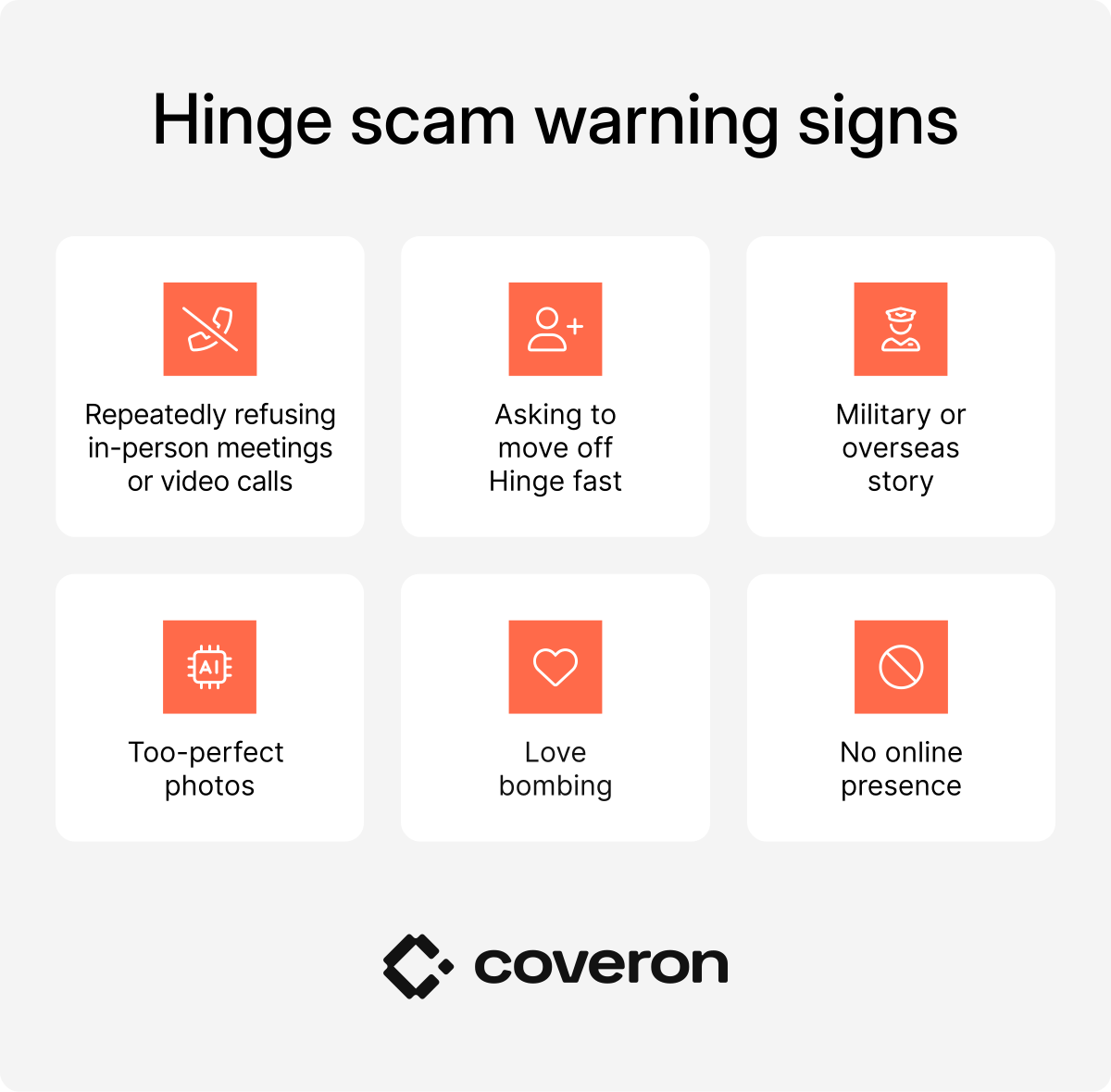
Hinge scammers tend to follow predictable patterns. If you want to know if a Hinge profile is fake, here are the most common red flags to watch out for:
- Repeatedly refusing in-person meetings or video calls. A Hinge scammer can’t show their face because it won’t match their photos.
- Asking to move off Hinge fast. If they’re pushing to switch apps after a couple of messages, be cautious. Potential scammers also often ask for phone numbers early.
- No online presence. Search their name or run their photos through a reverse image search on Google Images.
- Too-perfect photos. If the photos look like they came from a modeling shoot, or if a reverse image search links them to stock photo sites or another person’s social media accounts, this could suggest stolen photos.
- Love bombing. Declaring love within a few weeks or being overwhelmingly attentive from the start is emotional manipulation.
- Military or overseas story. Being stationed abroad is a classic setup for explaining why they can’t meet.
What should you do after a Hinge scam?
If you think you’ve been scammed on Hinge, you need to act fast to limit the damage:
- Contact your bank immediately. If you’ve transferred money or shared financial information, call your bank right away. They may be able to reverse transactions or place a hold on your bank account.
- Block and report the profile. Tap the three dots on the scammer’s Hinge profile and report the account by tapping "Report" and choosing a reason for why you’re reporting the scammer.
- Cut off all contact. Don’t just block them on Hinge. Remove them across every platform you connected on, including WhatsApp and any other social media sites.
- Update your passwords and enable two-factor authentication. If you clicked a suspicious link or shared any login information, update your passwords immediately and enable two-factor authentication on your online accounts.
- Monitor your financial accounts. Watch for unusual transactions, new accounts opened in your name, or unexpected credit inquiries, all of which can signal identity theft.
- Report the scam. File a report with the Federal Trade Commission and contact your local law enforcement if significant money was lost.
How can you protect yourself from Hinge scammers?
Staying safe on dating apps comes down to a few consistent habits, so follow these tips:
- Never send money to a match. No matter how convincing the story or how strong the emotional connection feels, don’t send money to someone you haven’t met in person.
- Verify photos. Run their profile photos through a reverse image search. If the same images appear on stock photo sites or link to another real person’s account, you’re dealing with a fake profile.
- Protect your personal details. Don’t share your home address, workplace, Social Security number, or sensitive information.
- Keep early conversations on the app. Hinge has moderation tools to detect and remove suspicious accounts. The longer you stay on the platform, the more protection you have.
- Look for the verified badge. Hinge’s verification process requires users to confirm their identity with a selfie. It’s not foolproof, but it does add accountability.
- Request a video call early. A quick video call early in the conversation is one of the most reliable ways to confirm you’re talking to a real person.
- Check if your data’s already out there. Coveron offers a free tool to check if your email has been hacked.
If you’re worried about online safety more broadly, it’s worth knowing what support is available. Coveron is an identity theft protection service that monitors the dark web 24/7 and sends near-instant security alerts if your personal information is exposed.
Get dark web alerts plus up to $100K in eligible online-fraud coverage.
30-day money-back guarantee
FAQ
References
[1]: Romance scammers’ favorite lies exposed, https://www.ftc.gov/news-events/data-visualizations/data-spotlight/2023/02/romance-scammers-favorite-lies-exposed opens in a new tab (2023)