What is catfishing?
Catfishing is a form of online deception in which someone creates a fictional identity or substantially fabricates major parts of their real identity to mislead another person. A catfisher may combine stolen or AI-generated photos with an invented name, career, location, education, family history, and other details to make the persona appear authentic.
What separates catfishing from simply exaggerating a detail about yourself is the scale of the deception. The fabricated persona is used to gain your trust or build a relationship under false pretenses. It can then be used for online scams, impersonation scams, romance scams, harassment, or attempts to get money or personal information from you.
A convincing profile can look successful, attentive, and completely genuine, which is why the deception may be difficult to spot until inconsistencies or requests begin to appear.
Why is it called catfishing?
The catfishing origin story traces back to the 2010 documentary Catfish, which followed Nev Schulman as he discovered that a woman he had formed an online relationship with was not who she claimed to be.
Near the end, the documentary recounts a story about catfish being placed in tanks of transported cod to keep them active. The comparison was applied to people who keep others guessing, and the term later became widely associated with online deception through MTV’s Catfish series.
How does catfishing work?
Catfishing typically moves through four stages — learning about the target, creating a believable fake identity, building the target’s trust, and eventually trying to get money, personal information, intimate content, or access to something valuable from them.
Stage 1. Targeting and research
A catfisher may study your public social media to learn about your interests, career, family, travels, and favorite places. Personal information exposed in data breaches may also end up on the dark web or criminal forums, where scammers can find details that help them make a fake identity or story more convincing.
That information can make a stranger seem unusually familiar with your life from the start.
Stage 2. The bait
The catfisher creates a profile using stolen or AI-generated photos and invents details such as a career, location, education, or family background. The catfisher may also use AI tools to make the fabricated identity look more credible, a tactic increasingly seen in AI scams.
Stage 3. The hook
Once contact begins, the catfisher may use manipulation tactics such as love bombing — overwhelming you with affection or talk of a serious future unusually quickly — or mirroring, where they copy your interests, opinions, and values.
They may also push for frequent contact, secrecy, or distance from friends and family who could question the relationship.
Stage 4. The reel
Once trust is established, the catfisher introduces the real objective. They may ask for money or gift cards, promote supposed investment scams, request intimate images, or try to get passwords or personally identifiable information (PII), such as your full name, address, or ID details.
The trust built over time can make the request seem credible because you believe you already know the person.
Who catfishers target
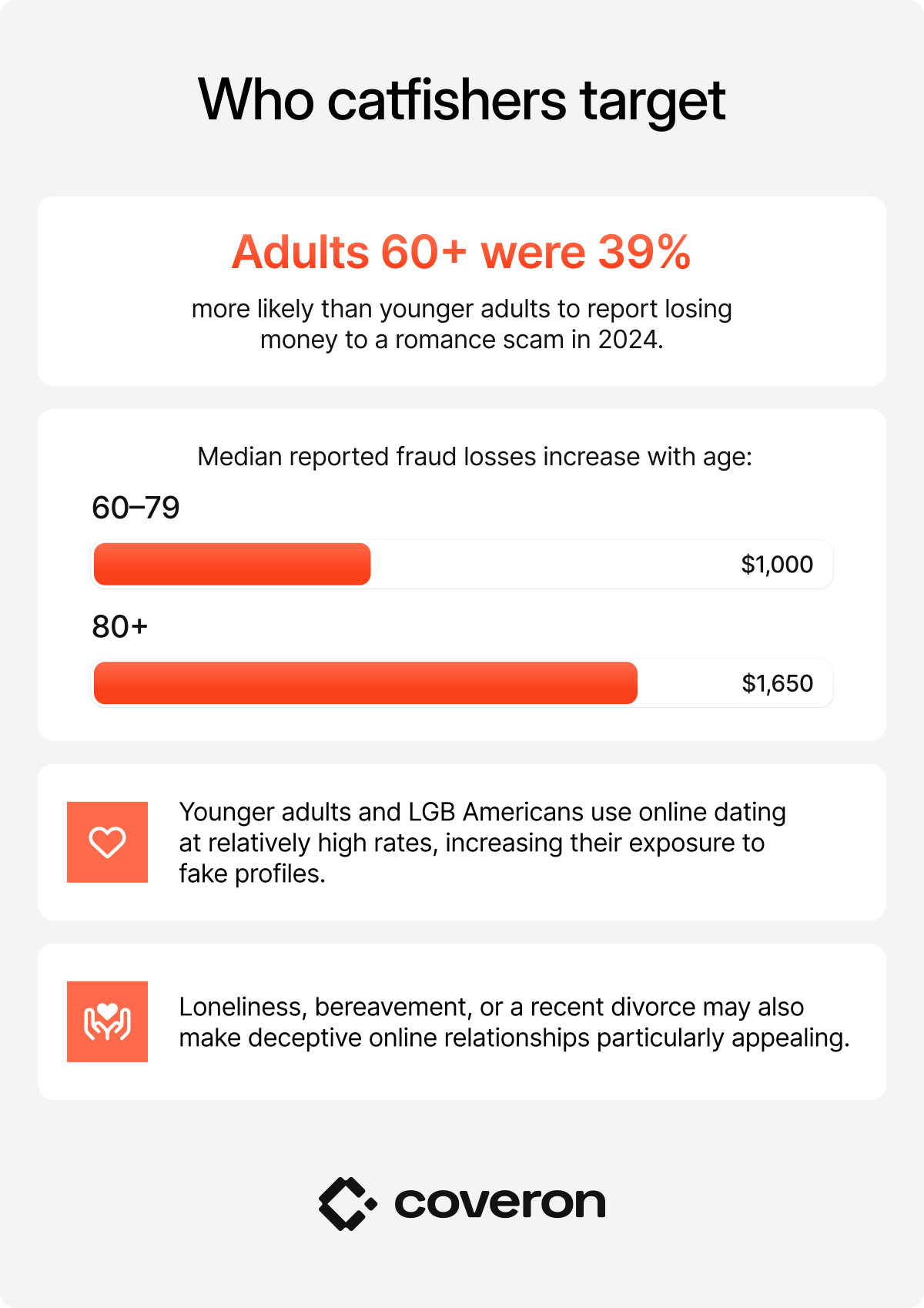
Anyone can be catfished, regardless of age or how comfortable they are online. However, the financial consequences can be especially severe for older adults. In 2024, adults 60 and older were 39% more likely than younger adults to report losing money to a romance scam.[1] Across fraud types, median reported losses also increased with age, reaching $1,000 for people ages 70-79 and $1,650 for those 80 and older.[2]
Loneliness, bereavement, or a recent divorce can make a new online relationship feel especially meaningful, and scammers may deliberately exploit that trust. That is one reason scams targeting seniors can lead to particularly serious financial and emotional harm — especially when the deception continues long enough for the scammer to start asking for money.
Where catfishing happens
Catfishing can happen anywhere people meet and build relationships online. Dating apps like Tinder, Bumble, and Hinge make it normal to connect with strangers, giving catfishers an easy way to hide behind an attractive profile and gradually build trust. Fake identities are also a common tactic behind Hinge scams.
Social media gives catfishers access to photos, posts, and personal details they can copy when building a fake identity. On Instagram, Facebook, or Snapchat, they may use stolen photos, copied posts, and fabricated personal details to make an account look established. A polished profile is not proof that the person behind it is genuine, and some Instagram scams rely on exactly this kind of false identity.
A catfisher may also push to move your conversation from a dating or social platform to a messaging app. This is common in WhatsApp scams, while the criminals behind Telegram scams can also use fake identities to build trust before introducing a financial request or another scheme.
Gaming platforms are another place where catfishing can happen. Players often communicate with people they have never met offline, sometimes for weeks or months. That familiarity can make a fake identity harder to question, especially when a casual gaming friendship gradually becomes a more personal relationship.
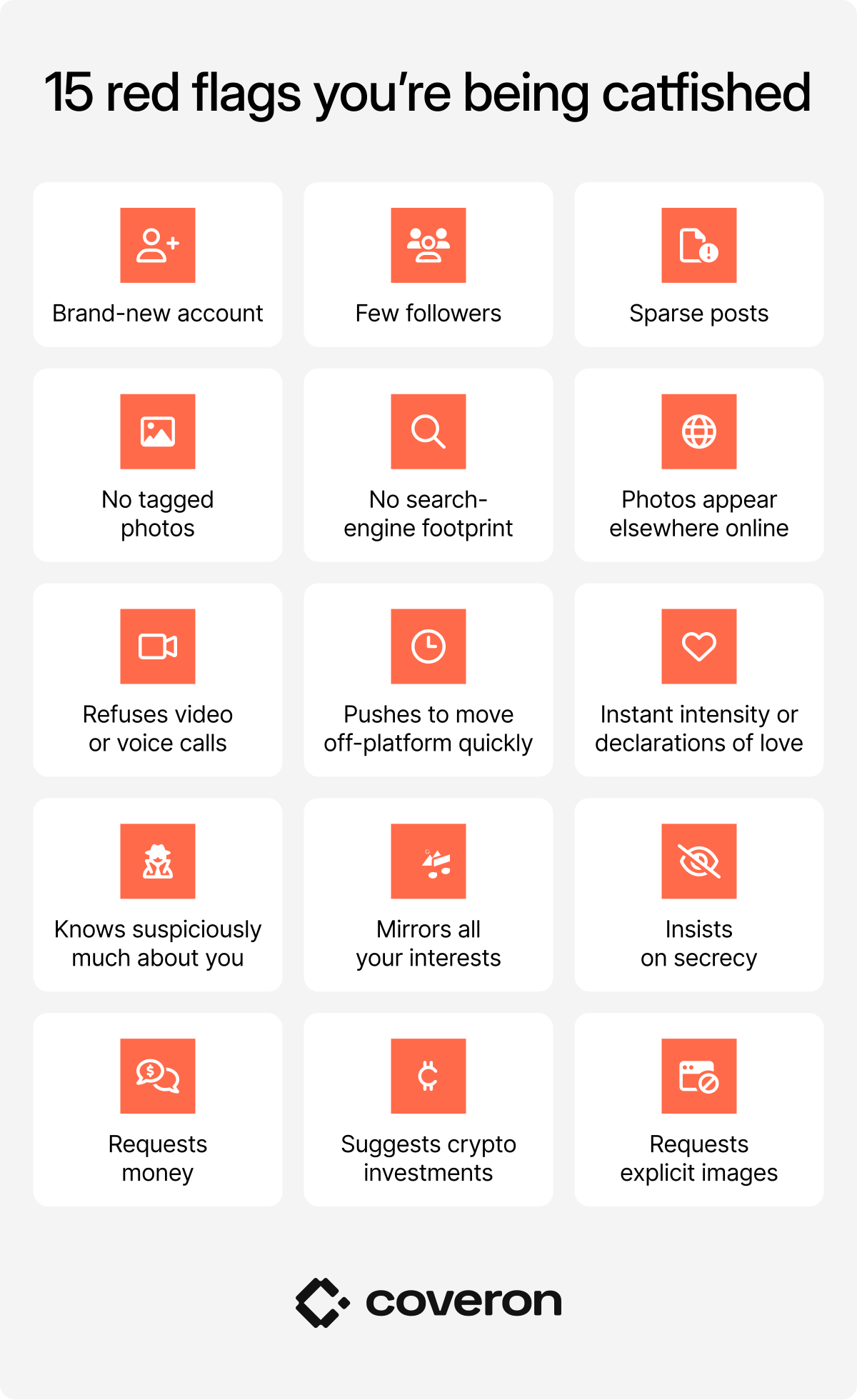
15 warning signs you’re being catfished
One unusual detail doesn’t prove someone is fake. But several catfishing red flags appearing together — especially avoiding live contact while becoming intensely personal or asking for money — are a good reason to slow down and verify who you’re talking to.
- Brand-new account. A recently created account deserves extra scrutiny if the person claims to have an established career or social circle, or long history in their community but has almost no online history.
- Few followers. Follower counts alone prove nothing. But if someone claims to have a public-facing career, large social circle, or long online history while showing almost no genuine interaction with other accounts, take a closer look.
- Sparse posts. A fake profile may contain only a handful of polished photos and little evidence of ordinary life between them. Several posts uploaded within a short period can also suggest the account was assembled quickly.
- No tagged photos. Real accounts often accumulate photos, comments, and interactions from other people. If someone frequently talks about friends and family, but there are no tags, comments, or photos showing those relationships, that missing history may be worth questioning.
- Little or no trace of them online. Search their name alongside details such as their employer, business, or location. If someone claims a prominent career but has no credible digital footprint, their story may deserve more scrutiny.
- Photos appear elsewhere online. A profile photo can be genuine while belonging to someone else. A reverse image search may reveal the same picture on another person’s profile, company website, or account using a different name.
- Refuses video or voice calls. A broken camera or a busy schedule may be reasonable once. Repeatedly avoiding even a brief live conversation over several weeks is much harder to dismiss.
- Moves the conversation elsewhere quickly. Moving from a dating or social platform to WhatsApp, Telegram, text, or email is not automatically suspicious. Pressure to do it almost immediately, before you have verified the person, can be.
- Instant intensity and declarations of love. Be cautious if someone starts talking about love, commitment, or a serious future after only a few conversations. Genuine relationships usually take longer to develop.
- Knows suspiciously much about you. If a new contact seems unusually familiar with your family, travels, hobbies, or favorite places, consider whether those details are already publicly visible online.
- Mirrors every interest. Shared interests are normal. If they seem to agree with almost everything you say or claim unusually similar life experiences, take a closer look.
- Insists on secrecy. Treat repeated attempts to keep the relationship hidden from friends or family as a warning sign, especially if the person dismisses anyone who questions them.
- Requests money. Be wary of any online contact you haven’t met asking you to cover an emergency, medical bill, customs fee, or other expense — particularly through gift cards, wire transfers, or payment apps.
- Suggests crypto investment opportunities. Be highly suspicious if a new romantic interest recommends cryptocurrency or trading platforms, especially while showing screenshots of supposed profits or presenting themselves as unusually financially successful.
- Requests explicit images. Intimate photos can later be used for blackmail or shared without your consent. Avoid sending them to someone whose identity you have not independently verified.
How to find out if someone is catfishing you
If you suspect someone may be catfishing you, verify their identity independently before confronting them. A few practical checks can reveal inconsistencies that conversation alone may not.
- Reverse-search their photos. Use Google Lens, TinEye, or Bing Visual Search to check whether the same image appears under another name or on older, unrelated websites.
- Check for signs of AI-generated images. Look for distorted background text, inconsistent jewelry, unusual details around hands or ears, or overly smooth skin. AI-image detection tools can help, but their results aren’t proof.
- Ask for a live video call. If you are still uncertain, ask them to turn their head, move a hand across their face, change the lighting, or hold up a handwritten note. These actions can make prerecorded or manipulated footage harder to pass off as live.
- Ask location-specific questions. Ask something practical about the city or neighborhood they claim to know well, then check whether the answer makes sense.
- Compare their story across platforms. Look at jobs, dates, locations, mutual connections, comments, and tagged photos. One discrepancy may mean little, but several conflicting identities are much harder to explain.
Why do people catfish?
People catfish for many different reasons, from insecurity or loneliness to money, revenge, or harassment. Research suggests some people create fake identities to present a more attractive version of themselves, connect with others, entertain themselves, or make money.[3]
Not every motive begins with an intention to cause harm. Someone may create a more attractive or successful identity because they feel insecure, lonely, or uncomfortable revealing part of themselves online. The deception can still cause emotional harm when another person becomes invested in a relationship that isn’t what it appears to be.
Using an alias or withholding personal details for privacy is not automatically catfishing. For example, someone may hide their identity from an abusive ex-partner, or a parent may keep details about a child private for safety rather than to deceive someone into a false relationship.
Malicious motives include stealing money or private information, revenge, stalking, harassment, and cyberbullying. Some catfishing is part of organized fraud rather than the work of a single scammer. INTERPOL has documented scam centers involved in romance and investment fraud, including operations where trafficked workers were forced to carry out online scams.[4]
What is the psychology of catfishing?
Catfishing is not a mental illness, and no single psychological profile defines people who engage in it.
Research has found links between catfishing and traits such as narcissism, psychopathy, and sadism.[5] However, that does not mean catfishing is a diagnosis or that everyone who catfishes has these traits or a mental health disorder.
The real dangers of catfishing
Catfishing can affect far more than an online relationship. The consequences may involve your finances, identity, privacy, reputation, emotional well-being, and, in some cases, physical safety.
- Financial loss. In 2025, confidence/romance fraud caused over $929 million in reported losses, including around $584 million among people 60 and older.[6]
- Sextortion. Intimate photos or videos can become leverage for sextortion, exposing you to blackmail and serious loss of privacy.
- Identity theft and account takeover. Personal details shared in conversation may help criminals attempt identity theft or gain access to your accounts.
- Harassment and reputational damage. Impersonation, unwanted contact, false posts, or leaked private material can affect your relationships and professional reputation.
- Physical danger. Sharing your home address, routine, or plans to meet can expose information that may be misused offline.
- Psychological harm. Betrayal, shame, anxiety, anger, and self-doubt can continue after the deception ends and may make you reluctant to seek help or report what happened.
Is catfishing illegal?
Catfishing can become a crime when it involves fraud, identity theft, cyberstalking, cyber extortion, or sexual exploitation involving minors.
That is why prosecutions are rarely described simply as “catfishing cases.” Instead, prosecutors usually charge the specific crime involved, such as fraud, identity theft, cyberstalking, or extortion.
Legal precedents in the US
In United States v. Sayer (2014), Shawn Sawyer used online impersonation and false advertisements as part of a years-long harassment campaign against a former partner. Sayer pleaded guilty to federal cyberstalking, and the First Circuit upheld his 60-month sentence.[7]
In United States v. Osinger (2014), Christopher Osinger created a false Facebook page resembling his former partner and circulated explicit material about her to other people. The Ninth Circuit upheld Osinger’s cyberstalking conviction and 46-month sentence.[8]
Both cases show that a fake identity can become part of criminal conduct when it is used for stalking, harassment, or other illegal acts.
Disclaimer: This information is for general informational purposes and is not legal advice.
Famous examples of catfishing
Micah Richards, who played for Manchester City, has described being catfished during his career. An online contact posing as a female fan persuaded him to provide two Players’ Lounge tickets before disappearing. He later learned that four teammates had received the same approach, with around 10 to 12 tickets obtained in total.[9]
Another well-known catfishing case involved Notre Dame linebacker Manti Te’o. Te’o developed an online and phone relationship with someone he believed was a woman named Lennay Kekua before discovering that the identity had been fabricated. In a 2013 interview with ESPN, Te’o denied being involved in the hoax and said he had believed the relationship was genuine.[10]
What to do if you’ve been catfished
If you discover that you’ve been catfished, stop contact, preserve evidence, and secure any accounts or personal information they may have accessed. What you do next depends on what you shared or lost.
What to do right away
Stop responding but save evidence before blocking the account. Screenshot conversations, the person’s profile and username, payment requests, phone numbers, email addresses, and any URLs they sent you.
Report the account to the platform where you met or communicated with the person, then block them.
If you sent money
Contact your bank, card issuer, payment app, or transfer provider immediately, explain that you were scammed, and ask whether the payment can be reversed. Cryptocurrency payments are typically irreversible, but it is still worth contacting the service you used.
Report the scam to the FTC at ReportFraud.gov and the FBI’s Internet Crime Complaint Center at IC3.gov. You can also file a report with local police. IC3 reviews submitted complaints for possible referral to law enforcement, but filing one does not guarantee that you will be contacted.
If you shared intimate images
Do not pay, send additional images, or delete the conversation. Preserve the evidence and use StopNCII.org if the images were taken when you were 18 or older. If they were taken when you were under 18, NCMEC’s Take It Down can help prevent or limit their spread on participating platforms.
If you shared personal information
Change any passwords you shared or exposed. If you used the same password on other accounts, change it there too. Enable two-factor authentication wherever possible.
If sensitive information, such as your Social Security number, was exposed, use IdentityTheft.gov to develop a recovery plan. You can also check whether your information appears in known breaches with Coveron’s free dark web scan, monitor financial accounts, and consider a credit freeze.
PRO TIP
Credit monitoring and dark web monitoring can help alert you to suspicious changes or exposed personal information after an incident.
How to avoid catfishing
You can reduce your risk of being catfished by limiting what strangers can learn about you and verifying new online contacts before you trust them.
- Review your social media privacy settings. Keep details such as your date of birth, phone number, and personal email address private.
- Be careful with location updates. Avoid posting your exact location or travel plans in real time, especially when they reveal where you are or when your home may be empty.
- Arrange a video call early. If an online relationship is becoming personal, arrange a live video chat rather than relying entirely on messages and photos. Repeated refusal is a reason to disengage.
- Never send money to someone you haven’t met in person. Emergencies, travel costs, medical bills, and other urgent requests should not override this rule.
- Don’t send intimate images before verifying someone’s identity. Once an image is shared, you may lose control over where it ends up or how it is used.
- Secure your accounts. Use unique passwords, a password manager, and two-factor authentication. Be cautious with unexpected links or attachments from new contacts, and learn how to spot a phishing email.
- Treat investment pitches as a serious warning. If an online romantic interest starts encouraging you to use a cryptocurrency or trading platform, don’t invest. This pattern is strongly associated with pig butchering scams.
How can Coveron help protect you from catfishing scams?
Good online habits can reduce your exposure to catfishing. Coveron also offers scam protection, along with cyber extortion coverage for qualifying extortion incidents.
These measures can complement the prevention steps above, especially if a deceptive online relationship escalates beyond a fake profile into financial fraud, blackmail, or another form of cyber extortion.
Get notified and act immediately.
30-day money-back guarantee
FAQ
References
[1] Federal Trade Commission. (2025, December 1). Protecting older consumers 2024–2025: A report of the Federal Trade Commission. https://www.ftc.gov/system/files/ftc_gov/pdf/P144400-OlderAdultsReportDec2025.pdf opens in a new tab
[2] Federal Trade Commission. (2025, March). Consumer Sentinel Network Data Book 2024. https://www.ftc.gov/system/files/ftc_gov/pdf/csn-annual-data-book-2024.pdf opens in a new tab
[3] Ryan, S., & Taylor, J. (2024). An exploration of the motivations of catfish perpetrators and the emotions and feelings expressed by catfish victims using automated linguistic analysis and thematic analysis. Discover Data, 2, Article 6. https://link.springer.com/article/10.1007/s44248-024-00011-5 opens in a new tab
[4] INTERPOL. (2026, March 16). INTERPOL report warns of increasingly sophisticated global financial fraud threat. https://www.interpol.int/News-and-Events/News/2026/INTERPOL-report-warns-of-increasingly-sophisticated-global-financial-fraud-threat opens in a new tab
[5] Lauder, C., & March, E. (2023). Catching the catfish: Exploring gender and the Dark Tetrad of personality as predictors of catfishing perpetration. Computers in Human Behavior, 140, Article 107599. https://www.sciencedirect.com/science/article/abs/pii/S0747563222004198?via%3Dihub opens in a new tab
[6] Federal Bureau of Investigation. (2026). 2025 IC3 annual report. Internet Crime Complaint Center. https://www.ic3.gov/AnnualReport/Reports/2025_IC3Report.pdf opens in a new tab
[7] United States v. Sayer, 748 F.3d 425 (1st Cir. 2014). https://media.ca1.uscourts.gov/pdf.opinions/12-2489P-01A.pdf opens in a new tab
[8] United States v. Osinger, 753 F.3d 939 (9th Cir. 2014). https://cdn.ca9.uscourts.gov/datastore/opinions/2014/06/04/11-50338.pdf opens in a new tab
[9] Lineker, G., Shearer, A., & Richards, M. (Hosts). (2023, October 25). Getting catfished for match tickets, Konsa for England and the most embarrassing sponsor mishaps (Episode 36) [Audio podcast episode]. In The Rest Is Football. Goalhanger. https://podcasts.apple.com/gb/podcast/getting-catfished-for-match-tickets-konsa-for-england/id1701022490?i=1000632505501 opens in a new tab
[10] ESPN.com. (2013, January 18). Manti Te’o denies being part of hoax. ESPN. https://www.espn.com/college-football/story/_/id/8859077/manti-teo-notre-dame-fighting-irish-denies-being-part-hoax-late-girlfriend opens in a new tab